
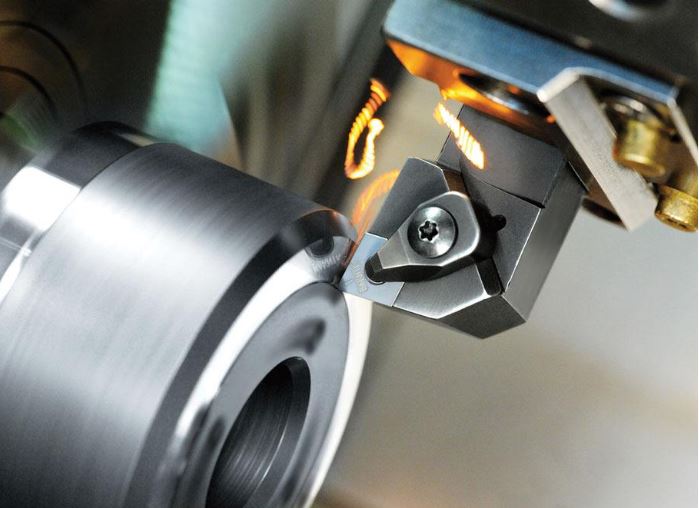
In the manufacturing of precision bearings, hard turning processes—particularly for materials such as GCr15/SAE 52100—have become widely adopted. However, when utilizing CBN inserts for the finish machining of bearing steels with a hardness of HRC 58–62, surface burn and the formation of a secondary-quenched "white layer" constitute the primary obstacles compromising part integrity.
Hard turning is a process characterized by significant thermo-mechanical coupling. According to Shaw's principles of metal cutting (1984), when the instantaneous temperature within the cutting zone exceeds the material's transformation point (approximately 727°C), re-austenitization occurs on the workpiece surface.
White Layer: An extremely fine martensitic layer formed on the surface following rapid heating and subsequent quenching. Although highly hard, this layer is extremely brittle and prone to initiating microcracks.
Dark Layer: A region of over-tempering situated beneath the white layer; its hardness is lower than that of the substrate, and it severely compromises the contact fatigue life of the bearing.
Properly configuring the operating conditions for CBN inserts used on HRC 58–62 bearing steel is a prerequisite for preventing thermal damage. The following factors are critical:
A. Tool Wear and Heat Flux Distribution
According to technical research by Sandvik Coromant, as flank wear increases, the contact area—and thus the friction—between the cutting edge and the workpiece expands.
Critical Threshold: When flank wear exceeds 0.15 mm to 0.20 mm, the proportion of heat transferred into the workpiece rises significantly, and the risk of thermal damage increases exponentially.
B. Influence of Physical Properties of CBN Grades (PCBN)
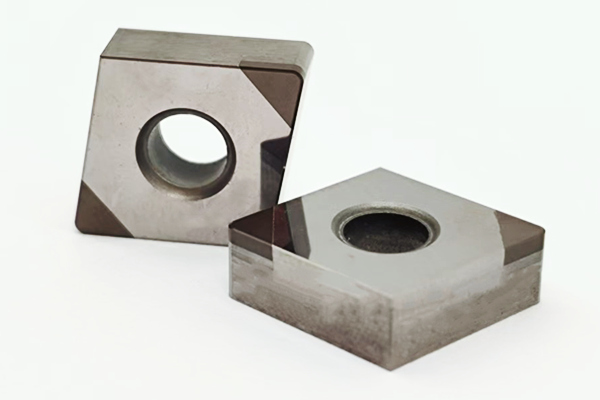
For continuous cutting operations on HRC 58–62 materials, priority should be given to low-content CBN (PCBN) grades.
Advantages: This material type (typically containing 45%–60% CBN) features low thermal conductivity and exceptional hot hardness. Compared to high-content CBN grades, it effectively insulates the workpiece, preventing cutting heat from being conducted into its interior.
Evaluation index | Recommended range value (HRC 58–62) | Remark |
Linear velocity(vc) | 100 – 160 m/min | The probability of burns increases sharply when the speed exceeds 180 m/min |
Feed (f) | 0.08 – 0.15 mm/rev | Avoid "heat" caused by vf<0.05mm/rev |
Cutting depth (ap) | 0.10 – 0.25 mm | It needs to match the radius of the arc at the tip of the cutting tools (rε) |
Cutting tools edge Treatment | T-land (0.1mm x 20°) | Strengthen the cutting edge and reduce the heat generated by microscopic chipping |
Operating Conditions: Material: | GCr15 (HRC60) |
Process | Precision Turning of Outer Circle |
Parameters | vc = 180 m/min; |
f | 0.05 mm/rev |
ap | 0.1 mm |
Problem Manifestation | Local discoloration, Ra fluctuation on the surface. This is a typical case of thermal accumulation causing burn damage |
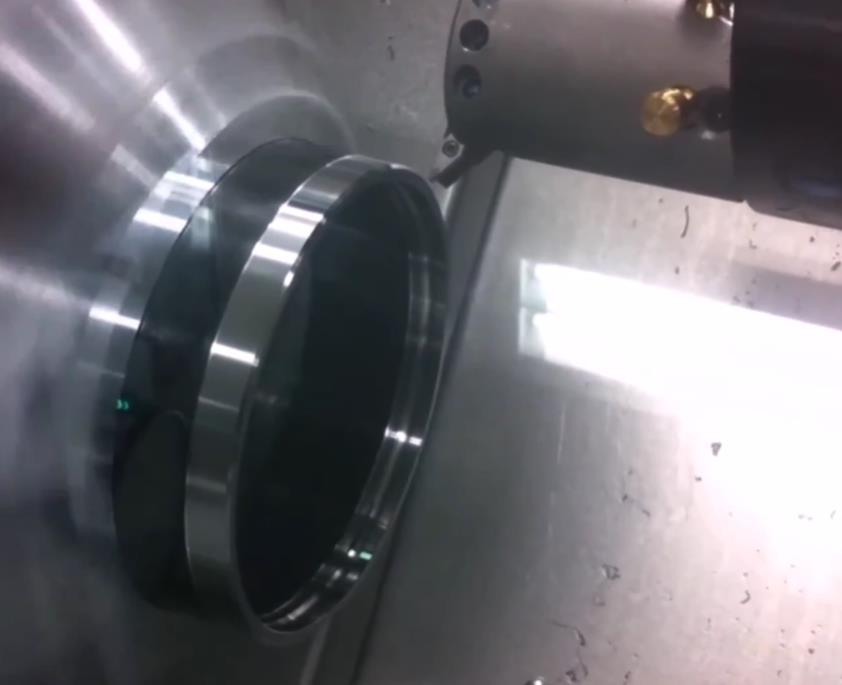
Adjustment 1 | Feed rate from 0.05 mm/rev to 0.08 mm/rev to increase the cutting ratio and reduce friction |
Adjustment 2 | Cutting speed from 180 m/min to 150 m/min to reduce heat input |
Optimization result | Surface burns disappeared; Ra value remained stable at 0.8–1.0; Tool life did not show significant decrease. |
Summary: The core of processing high-hardness steel with CBN tool is not "whether it can be cut", but "how the heat is distributed".
If you are currently engaged in the precision processing of quenched steel, please send me your parameters. I can help you determine whether it is a problem with the process or with the tools.
---EDITOR: Doris Hu,Erin Zhang
---POST: Doris Hu
Semiconductor Industry Solutions
PCD & PCBN Tools Grinding Industry
Diamond Cutting Bruting Polishing
Add: No.171 Zhongyuan Rd, Zhongyuan District, Zhengzhou, 450001, Henan, China
Tel: +86-371-86545906
Phone / Whats App: +86 18339903057
E-mail: [email protected]