
Both MCD and CVD single crystal diamond tools can be used for precision machining of precious metals. Commercial diamond tool manufacturers offer both types for applications including jewelry engraving, faceting, mirror finishing and precision machining of gold, silver and platinum alloys
The better choice depends on what you are trying to achieve: edge sharpness, surface finish, tool consistency, cutting geometry, production stability or overall tooling cost.
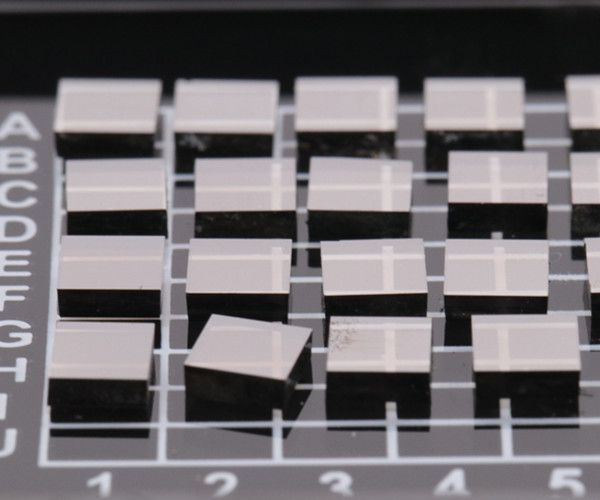
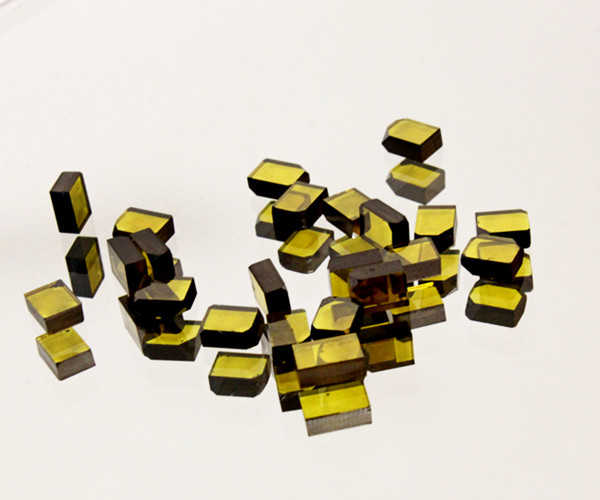
MCD stands for Monocrystalline Diamond, commonly referring to synthetic single crystal diamond produced by the HPHT process.
CVD stands for Chemical Vapor Deposition. CVD single crystal diamond is grown through a chemical vapor deposition process and can also be manufactured into precision cutting tools.
Both materials belong to the single-crystal diamond tool category. Unlike PCD, they can be processed into extremely sharp individual cutting edges, which is particularly valuable when machining soft and ductile non-ferrous metals.
MCD cutting tools are suitable for soft and viscous gold and copper alloys where ordinary cutting tools may cause scuffing or crushing, and lists gold, silver, platinum and palladium alloys among applicable materials.
| Feature | MCD Diamond Tool | CVD Single Crystal Diamond Tool |
|---|---|---|
| Diamond structure | Single crystal | Single crystal |
| Typical synthesis route | HPHT | CVD |
| Cutting edge | Extremely sharp | Extremely sharp and suitable for precision edge preparation |
| Precious metal machining | Gold, silver, platinum, palladium and other non-ferrous alloys | Gold and other non-ferrous/precious-metal applications |
| Jewelry applications | Bright cutting, engraving, faceting, mirror finishing | Precision engraving, bright cutting and customized jewelry tools |
| Crystal orientation | Important during tool preparation | Depends on the CVD crystal and tool design |
| Main consideration | Edge quality, orientation and geometry | Crystal quality, edge preparation, geometry and consistency |
| Suitable application | High-quality decorative and precision cutting | Precision and repeatable cutting applications |
| Customization | Available | Available |
The comparison should not be interpreted as one material being universally better than the other. Tool geometry and edge preparation remain critical even when the diamond grade is excellent.
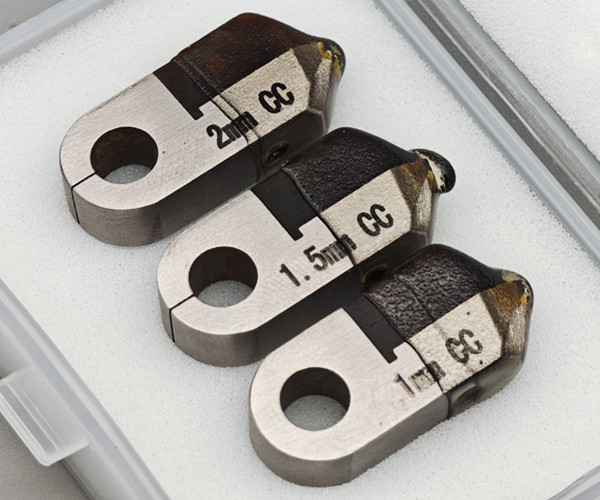
Gold and other precious-metal alloys are relatively soft compared with many engineering materials, but this does not make them easy to machine.
During engraving or bright cutting, the material can deform rather than fracture cleanly. If the cutting edge is not sufficiently sharp or the tool geometry is unsuitable.
A single crystal diamond can be ground and polished to produce an exceptionally sharp cutting edge. Manufacturers of precision diamond tools use this characteristic for mirror finishing and ultra-precision machining of non-ferrous materials.
For jewelry manufacturers, the objective is not simply to remove material. The objective is often to create a clean decorative cut with controlled geometry and a highly reflective surface.
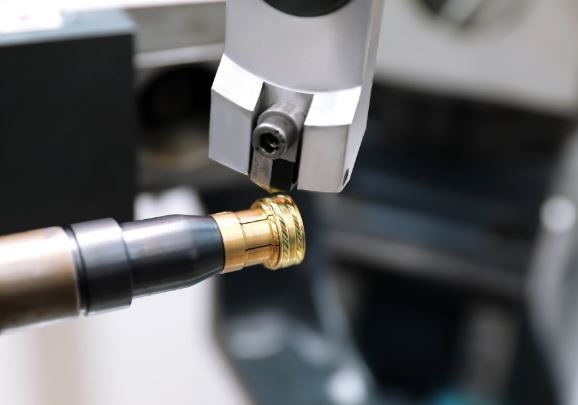
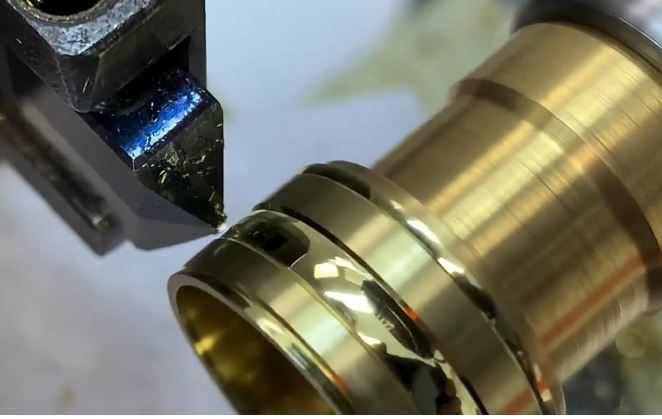
MCD is a synthetic single crystal diamond material commonly produced using high-pressure, high-temperature technology.
Sumitomo Electric, for example, describes its SUMICRYSTAL material as a synthetic single crystal diamond produced using high-pressure/high-temperature technology and supplies it as a cutting-tool material.
MCD has a long history in precision diamond tooling. Tokyo Diamond Tools has manufactured single-crystal diamond cutting tools for decades and specifically identifies applications in gold and other soft, viscous alloys.
MCD diamond tools can be considered for
--Gold jewelry cutting
--Silver jewelry machining
--Platinum jewelry machining
--Palladium alloy machining
--Ring engraving
--Bracelet and bangle cutting
--Chain faceting
--Decorative bright cutting
--Mirror-finish machining
--Watch and jewelry components
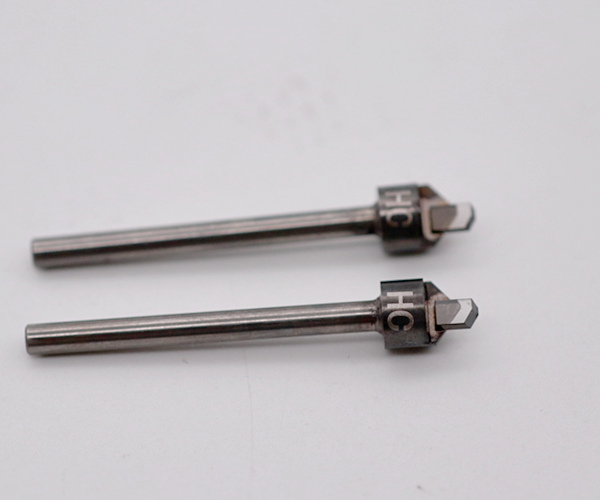
Posalux-type diamond tools are another common form of jewelry cutting tool. Gold Technic describes Posalux tools as widely used in jewelry manufacturing for cuts and engravings on gold and silver jewelry, including manual engraving machines, CNC bangle/ring machines and chain faceting machines.
However, the crystal orientation must be considered during tool manufacture because single-crystal diamond has crystallographic directionality. Precision tool manufacturers therefore pay close attention to diamond orientation and edge preparation.
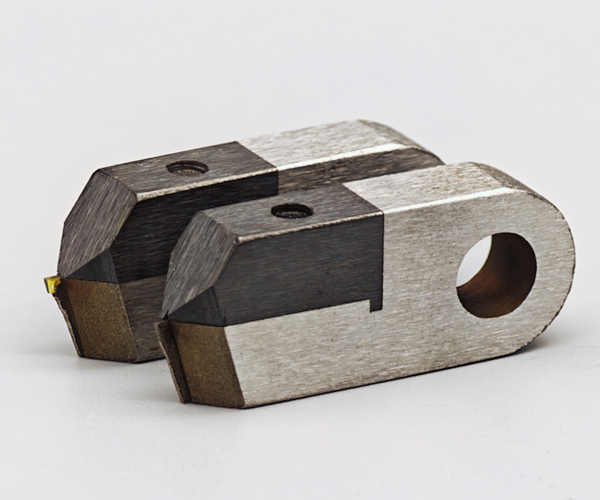
CVD single crystal diamond is produced by chemical vapor deposition rather than the HPHT synthesis route used for conventional synthetic MCD. In CVD growth, carbon-containing gases are activated under controlled conditions and carbon is deposited onto a diamond substrate or seed crystal to form diamond material.
For tool buyers, the key point is that CVD is not simply “another coating.”
For jewelry cutting tools, CVD can be supplied as single-crystal diamond material and subsequently processed into a precision cutting edge.
Some CVD diamond manufacturers specifically list gold and silver among the non-ferrous materials suitable for their tool-grade single crystal CVD diamond.
CVD single-crystal diamond tools are also offered in customized geometries for non-ferrous machining, including engraving tools, turning tools and milling tools.
Instead of asking only “MCD or CVD?”, start with the actual machining operation.
For ring and bangle applications, the tool may need to produce:
Sharp decorative lines
Bright-cut facets
Consistent reflective surfaces
Controlled groove geometry
Minimal burr formation
Posalux-style tools are commonly used for jewelry cutting and faceting, with different tool profiles available according to the desired decorative effect.
For these applications, both MCD and CVD single-crystal diamond tools can be evaluated.
For engraving and micro-detailing, the cutting edge and tool geometry become particularly important.
The tool may need to create:
Fine lines
Small grooves
Decorative patterns
Lettering
Logos
Micro-facets
In this situation, specify the required geometry and edge radius rather than simply ordering a generic “diamond tool.”
Single-crystal diamond manufacturers offer customized tool shapes for ultra-precision applications, including pointed, groove, straight and specialized geometries.
Many jewelry applications are designed to create a highly reflective surface directly during cutting.
MCD tools can produce mirror-finish machining on soft and viscous gold and copper alloys. C2 Diamond Tools similarly markets natural and single-crystal diamond tools for mirror-finish processing of precious materials.
For this type of application, the important parameters include:
Diamond quality + edge radius + tool geometry + machine stability + cutting conditions
Not the diamond name alone.
| Your priority | Selection focus |
|---|---|
| Maximum decorative surface quality | Cutting-edge quality and geometry |
| Fine engraving | Edge radius + tip geometry |
| Bright-cut jewelry | Sharpness + facet geometry |
| Gold and silver machining | Single-crystal diamond is a suitable option to evaluate |
| Ring/bangle faceting | Tool profile + machine compatibility |
| High production consistency | Diamond quality + geometry + manufacturing consistency |
| Existing Posalux machine | Shank dimensions + tool profile + machine interface |
| Tool replacement | Match existing geometry and machining conditions |
| MCD vs CVD decision | Compare finished tools under the same application conditions |
MCD and CVD single-crystal diamond tools can both be used in precision machining of precious metals. Industry suppliers currently offer single-crystal diamond tools for gold, silver, platinum and other non-ferrous materials, including jewelry engraving, faceting and mirror finishing.
For a jewelry manufacturer, the most reliable selection process is therefore:
Workpiece → Machining Operation → Machine → Tool Geometry → Diamond Material → Edge Preparation → Cutting Conditions → Final Surface
Moresuperhard manufactures customized superhard cutting tools and can evaluate the appropriate MCD or CVD diamond tool according to the jewelry material, machine, tool drawing and required cutting effect.
If you are currently using an MCD or CVD jewelry tool and want to compare another diamond grade, send us the existing tool drawing, diamond size, tool angle, machine model, workpiece material and machining requirement. These details provide a much more reliable basis for tool selection than choosing MCD or CVD by material name alone.
Semiconductor Industry Solutions
PCD & PCBN Tools Grinding Industry
Diamond Cutting Bruting Polishing
Add: No.171 Zhongyuan Rd, Zhongyuan District, Zhengzhou, 450001, Henan, China
Tel: +86-371-86545906
Phone / Whats App: +86 18339903057
E-mail: [email protected]