
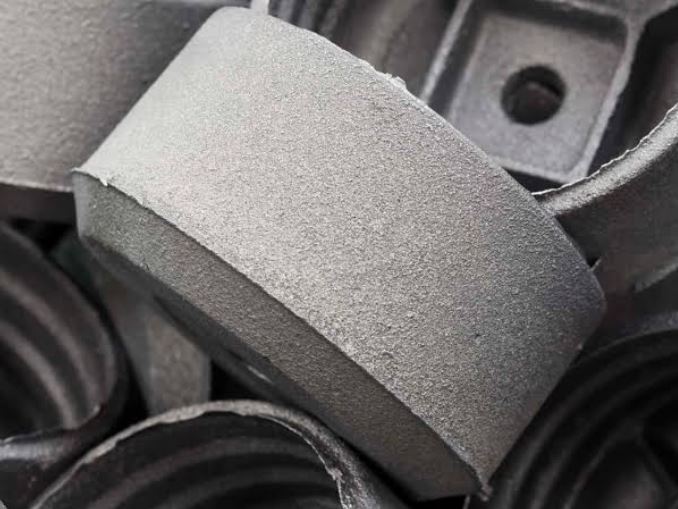
Ductile cast iron is widely used in automotive components, hydraulic systems, pumps and valves, construction machinery, wind power equipment, and other heavy-duty applications because it combines strength, toughness, wear resistance, and good castability.
However, ductile cast iron machining can become increasingly challenging as manufacturers move toward higher-strength grades and higher production speeds. Problems such as rapid tool wear, edge chipping, dimensional drift, unstable surface finish, and short tool life can directly affect machining cost and productivity.
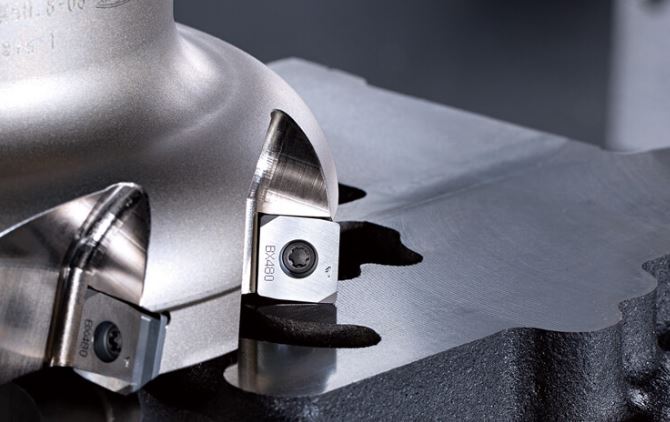
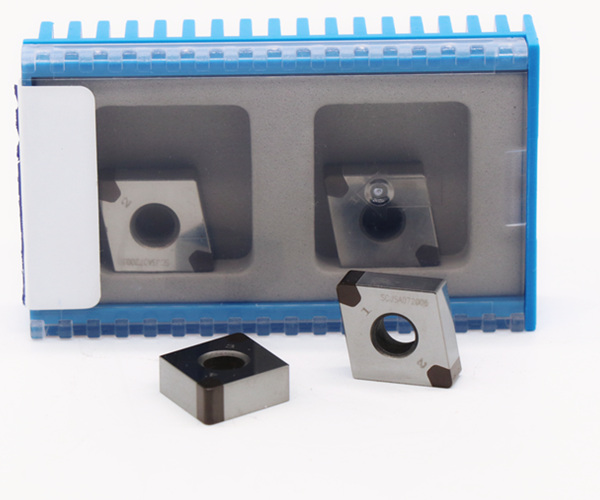
For these applications, CBN cutting tools for ductile cast iron can provide an effective solution when the CBN grade, cutting edge, insert geometry, and machining parameters are properly matched to the workpiece.
Ductile cast iron is different from gray cast iron mainly because of its graphite morphology. Its spheroidal graphite structure contributes to higher tensile strength, toughness, elongation, impact resistance, and fatigue performance.
These improved mechanical properties are beneficial in service, but they can also increase the demands placed on cutting tools.
Compared with conventional gray cast iron, ductile cast iron can withstand greater mechanical loading during cutting. Higher-strength grades such as FCD600 and FCD700 can therefore place greater demands on tool wear resistance and cutting-edge strength.
Research on pearlitic-ferritic nodular cast iron has also identified the relationship between cutting conditions, cutting forces, cutting temperature, tool wear, and surface quality when using CBN tools.
Ductile cast iron can have different proportions of ferrite, pearlite, and other microstructural constituents. The matrix structure influences hardness, cutting forces, chip formation, tool wear, and surface finish.
This means that simply specifying “ductile cast iron” is often not enough when selecting a cutting tool.
The material grade, hardness, matrix structure, and actual machining operation should all be considered when selecting a CBN tool for ductile iron.
Real-world ductile iron components often contain casting surfaces, holes, grooves, steps, flanges, or uneven machining allowances.
The cutting edge may therefore experience repeated:
Entry → Exit → Re-entry
Such interrupted cutting conditions increase the requirements for cutting-edge strength and impact resistance and can lead to edge chipping if the tool design is not properly matched.
When machining ductile iron in high-volume production, manufacturers may encounter:
Rapid flank wear
Unstable tool life
Cutting-edge chipping
Dimensional drift
Unstable surface finish
Excessive tool changes
Limited cutting speed
Increased machine downtime
These problems are often connected. As the cutting edge wears, dimensional accuracy and surface quality can deteriorate, forcing manufacturers to reduce cutting speed or replace tools more frequently.
Therefore, the objective should not simply be longer tool life.
A better CBN cutting tool solution should balance:
Tool Life + Dimensional Stability + Surface Finish + Productivity
CBN can maintain good wear resistance under appropriate high-speed cutting conditions. For production machining, improved wear resistance can reduce tool changes and help maintain more consistent component dimensions.
High-speed machining generates substantial heat in the cutting zone. CBN has strong high-temperature performance, making it suitable for high-speed machining when the tool grade and cutting conditions are correctly selected.
For high-volume ductile iron machining, predictable tool life is often more valuable than simply achieving the maximum possible tool life.
A stable CBN tool can help manufacturers establish more consistent tool-change intervals, reduce unexpected downtime, and improve production planning.
No.
One common misconception is:
Higher CBN content → Higher hardness → Longer tool life
In practice, CBN tool performance depends on multiple factors, including:
CBN content
CBN grain size
Binder system
Edge preparation
Insert geometry
Nose radius
Cutting speed
Feed rate
Depth of cut
The correct balance between wear resistance and toughness depends on the actual application.
For example:
| Machining Condition | Key Tool Requirement |
|---|---|
| Roughing | Impact resistance and edge strength |
| Semi-finishing | Wear resistance and toughness |
| Finishing | Wear resistance, dimensional stability and surface finish |
| Continuous cutting | Wear resistance |
| Interrupted cutting | Chipping and impact resistance |
| High-speed machining | Thermal stability and wear resistance |
| High surface-finish requirements | Edge preparation, geometry and suitable CBN grain size |
This application-based approach is also reflected in commercial PCBN tooling systems, where different grades are developed for continuous cutting, interrupted cutting, roughing, and finishing applications
As a superhard cutting tool manufacturer, we can develop CBN tool solutions according to your ductile iron grade, hardness, machining operation, cutting conditions, insert geometry, and performance requirements.
Send us your workpiece material, hardness, machining operation, current cutting parameters, and tool specification to discuss a suitable CBN tooling solution.
Semiconductor Industry Solutions
PCD & PCBN Tools Grinding Industry
Diamond Cutting Bruting Polishing
Add: No.171 Zhongyuan Rd, Zhongyuan District, Zhengzhou, 450001, Henan, China
Tel: +86-371-86545906
Phone / Whats App: +86 18339903057
E-mail: [email protected]