With the rapid advancement of modern dentistry, premium dental materials are undergoing a profound transformation. Thanks to its near-perfect comprehensive properties, Zirconia (ZrO₂) ceramics are gradually replacing traditional titanium alloys as the material of choice for manufacturing high-end medical structures such as dental implants, crowns, and abutments.
However, for medical device manufacturers and dental milling centers (Dental Labs), high-precision machining of this cutting-edge material remains a daunting challenge. How can you ensure medical-grade precision while solving the issues of low yield rates and rapid tool wear? As a professional PCD tool manufacturer, we will analyze the material properties of zirconia and dive deep into the breakthrough advantages of Solid PCD micro Multi-Flute Milling Cutters in dental structural machining.
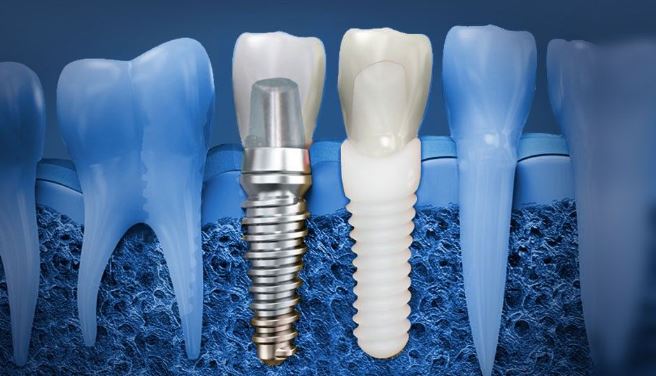
Difficult to maching Zirconia: "Edge Chipping" Caused by High Hardness and Brittleness
When milling the micro-structures of dental implants (such as micro-threads and abutment transition fillets), engineers face severe bottlenecks rooted in the inherent characteristics of zirconia:
* The "Brittle Shortcoming" – Highly Prone to Chipping and Micro-Cracks: Zirconia has a Mohs hardness of up to 8.5. Because the material lacks significant plastic deformation capabilities, once the local stress (shear or extrusion force) at the tool contact surface exceeds the material's limit during cutting, it easily triggers the propagation of microscopic cracks at the edges, ultimately resulting in visible chipping and fracturing. This is fatal for micro, complex dental implants.
* Severe Tool Wear Exacerbates Surface Extrusion: The solid carbide (tungsten carbide) end mills commonly used today blunt very quickly when dealing with high-hardness ceramics. A dull tool not only fails to cut smoothly but also generates intense rubbing, friction, and extrusion on the zirconia edges, further driving up the chipping rate.
* Strict Surface Finish Requirements: The surface roughness (Ra) of medical implants typically needs to be controlled within 1μm to ensure post-sintering strength and prevent bacterial colonization. Traditional tools rarely achieve this standard in a single pass.
To overcome these hurdles, there must be a qualitative leap in both tool material and structure. This is exactly why Micro-Diameter Solid PCD Multi-Flute Milling Cutters shine in medical machining.
* Superhard Material DNA (PCD - Polycrystalline Diamond):
PCD is a superhard material synthesized by sintering selected synthetic diamond micro-powders with a binder (usually cobalt) under ultra-high temperature and pressure. Its micro-hardness reaches around 8000HV, accompanied by extremely high thermal conductivity and a low coefficient of friction. This means it is far harder than zirconia itself and can rapidly dissipate heat during cutting, preventing thermal cracks in medical ceramics.
* The Manufacturing Limit of "Micro-Diameter":
Dental implants and abutments have extremely tiny structures. The "micro-diameter" we refer to typically requires tool diameters below 3.0mm, and sometimes as small as 0.5mm. Precisely machining PCD cutting edges on such a slender tool body requires state-of-the-art laser ablation or precision wire EDM technologies, which forms a high technical barrier for premium medical cutting tools.
* Solid & Multi-Flute Structure:
Unlike indexable inserts, the "solid" structure means the PCD blank is firmly brazed onto a highly rigid carbide shank and integrated into one piece, providing ultimate vibration resistance (runout accuracy is typically controlled within 0.002mm). The "multi-flute" design (e.g., 3, 4, or more flutes) evenly distributes the cutting load per tooth at high rotational speeds, achieving extremely stable micro-cutting.
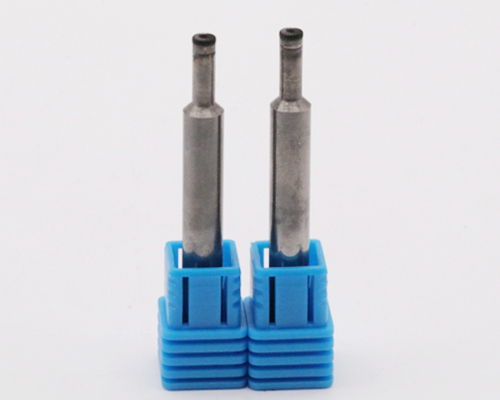
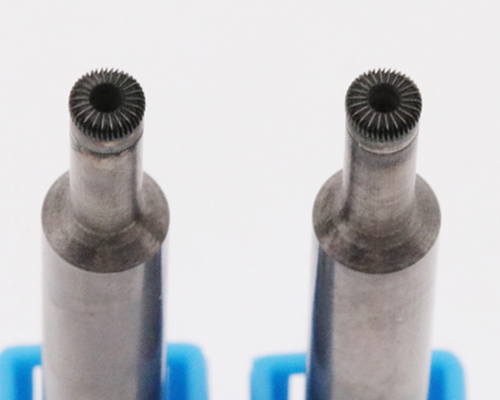
PCD Micro-Milling Cutters is ideal choice for machining Precision Zirconia Machining
Built on the robust material and structural foundation mentioned above, Micro-Diameter Solid PCD Multi-Flute Milling Cutters deliver revolutionary advantages in actual machining operations:
* Over 10x Lifespan, Drastically Reducing Cost-Per-Part
In continuous, high-intensity cutting, the extreme wear resistance of PCD micro end mills typically extends their lifespan to 10 to 25 times that of traditional carbide tools. This highly stable wear rate effectively eliminates downtime and batch dimensional deviations caused by frequent tool changes, making it highly suitable for automated, unmanned dental milling machines.
* Ultra-Low Cutting Forces, Eliminating Chipping at the Source
The root cause of edge chipping is excessive cutting force. Through specialized micro-grinding or laser edge preparation, PCD tools maintain incredibly sharp cutting edges. This reduces cutting forces by over 30%, shifting the tool-material interaction from "rubbing and extruding" to "crisp, clean shearing," thereby significantly reducing the zirconia chipping rate.
* Mirror-Like Surface Finish, Achieving a "Polish-Free" Standard
In the finishing stage, the low-friction characteristics of PCD, combined with the multi-flute structure and high-speed spindles, can easily and consistently reduce the surface roughness (Ra) of zirconia to 0.4μm or even lower. The smooth and refined surface saves machining centers from tedious and costly manual post-polishing processes.
Moresuperhard Milling solutions
In medical manufacturing, precision is never an accident; it is the result of systematic matching. Zirconia ceramics are typically machined in two stages: rough machining of the pre-sintered (green/bisque) state and final grinding/finishing of the fully sintered state.
As a source manufacturer of PCD cutting tools with profound technical expertise, we offer not only standard micro-diameter products but also powerful custom (non-standard) capabilities:
* Flute and Geometry Customization: Depending on your machining stage, we customize the specific rake angles, clearance angles, and chip flute volume to ensure optimal chip evacuation.
* Spindle Speed & Feed Rate Matching: Based on your machine conditions (e.g., 30,000-50,000 RPM high-speed spindles), we optimize the dynamic balance of the tool body and the cutting edge geometry.
* Tackling Fully Sintered Hard Materials: Even when dealing with the extreme hardness of fully sintered final zirconia parts, our precision PCD micro end mills continue to deliver stable performance.
If you are machining zirconia dental implants, abutments, or other precision medical structures and are plagued by high chipping rates, rapid tool consumption, or inconsistent yields, the Solid PCD Micro Multi-Flute Milling Cutter is the key solution to elevating your competitive edge