
For these applications, a conventional carbide end mill may not always provide the required combination of tool life, surface quality and production stability. PCD milling tools are widely considered for aluminum machining because of their wear resistance and ability to maintain a sharp cutting edge in suitable non-ferrous applications.
This case focuses on a 3-flute PCD helical end mill developed for side finishing of extruded aluminum. The tool uses a brazed PCD cutting head, tungsten carbide shank, square-end geometry and a 12 mm cutting diameter.
The application was side finishing of extruded aluminum profiles.
Unlike a general aluminum milling operation, side finishing places greater emphasis on the quality and consistency of the finished side surface. The cutting tool needs to remove the required amount of material while maintaining stable engagement with the aluminum profile.
The customer's requested tool configuration was:
| Tool Parameter | Specification |
|---|---|
| Tool type | PCD helical end mill |
| Cutting diameter | 12 mm |
| Shank diameter | 12 mm |
| Cutting length | 30 mm |
| Flute number | 3 flutes |
| End geometry | Square end |
| Cutting geometry | True helical geometry |
| Cutting material | PCD |
| Cutting head | Brazed PCD |
| Shank material | Tungsten carbide |
| Application | Side finishing of extruded aluminum |
The dimensions above come directly from the customer application requirements and should not be treated as a universal specification for every aluminum extrusion machining job.
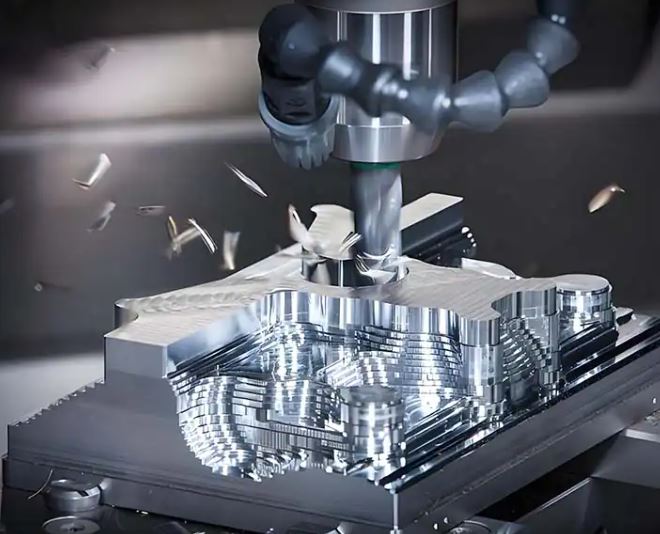
Aluminum is generally easier to cut than hardened steel because of its relatively low cutting resistance. However, that does not mean every aluminum machining operation is easy to stabilize.
Aluminum can adhere to the cutting edge and form built-up material, while chip evacuation and surface finish can become important issues during continuous production. Kennametal specifically notes that sharp cutting edges are important when machining aluminum to help avoid built-up edge and gumming, while PCD is used for high-speed aluminum machining where tool life and productivity are important considerations.
For extruded profiles, the machining area may also include long side surfaces, thin sections, shoulders or profile transitions. The tool therefore needs to be selected according to the actual profile and cutting engagement.
PCD, or polycrystalline diamond, is commonly used for machining aluminum and other non-ferrous materials where high wear resistance and stable cutting-edge performance are required.
Commercial PCD tool manufacturers offer dedicated PCD end mills and milling cutters for aluminum, including tools for face milling, peripheral milling, contouring and finishing.
For a customer machining extruded aluminum, the potential reasons for selecting PCD may include:
----Longer edge life in suitable aluminum applications
---Stable cutting-edge condition during repeated production
---Consistent surface quality
---Reduced risk of aluminum adhesion when the geometry is properly designed
---Suitability for high-speed aluminum machining
However, PCD should not be selected simply because it is harder than carbide. The actual benefit depends on the aluminum alloy, cutting operation, tool geometry, machine capability, production volume and cutting parameters.
One of the important aspects of this case is that the customer did not simply request a standard PCD end mill. The requested configuration included 3 flutes and true helical cutting geometry.
Flute number and helix geometry influence chip space, cutting engagement and chip evacuation. This is particularly relevant when machining aluminum because uncontrolled chips or chip recutting can negatively affect surface quality and machining stability.
PCD milling tool suppliers also provide different flute configurations and customized geometries according to the workpiece and machining requirements. For example, PCD end mills may be configured with different flute numbers depending on the application and required chip evacuation.
Therefore, the 3-flute configuration in this case should be understood as an application-specific design choice, not a recommendation that every aluminum extrusion should use three flutes.
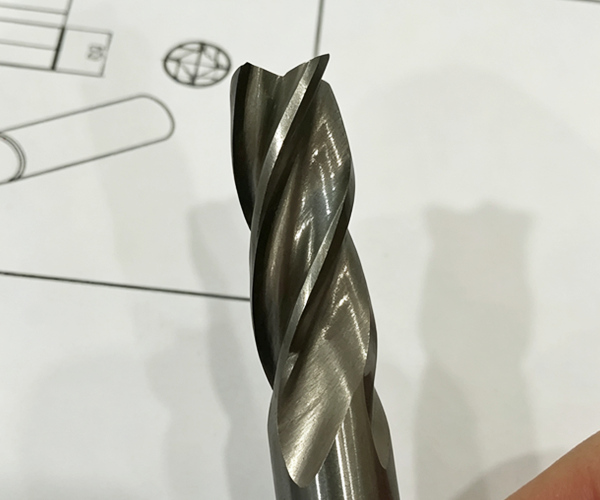
For side finishing, the cutting edge is continuously engaged along the machined surface. A helical cutting geometry allows the cutting edge to enter the workpiece progressively rather than having the entire cutting edge engage simultaneously.
This makes the relationship between the helix geometry, flute number, cutting depth, tool rigidity and chip evacuation important when designing a custom milling tool.
Industry tool suppliers use application-specific helical and spiral geometries for aluminum machining. Gühring, for example, describes spiral-fluted PCD tools for aluminum alloys with open chip spaces and polished surfaces designed to support chip evacuation.
For this reason, the helix should be considered as part of the complete tool geometry rather than as an isolated specification.
The customer required a square-end configuration.
For side-finishing operations where a defined corner and flat cutting end are required, square-end geometry can be matched to the machined profile and tool path.
However, the choice between square-end, corner-radius, ball-nose or profile geometry should be based on the actual part geometry and machining operation.
For custom PCD milling tools, the customer's part drawing or extrusion profile is therefore more useful than simply specifying “PCD end mill.”
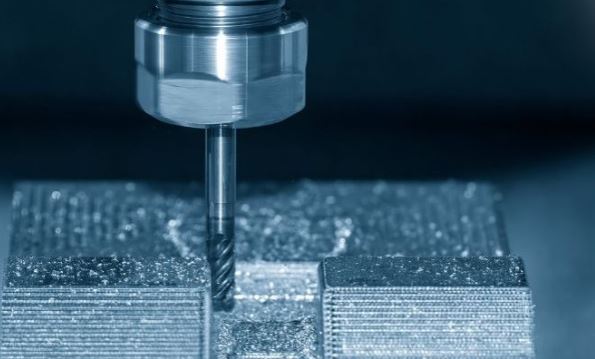
This tool uses a brazed PCD cutting head and tungsten carbide shank.
The cutting section is responsible for machining the aluminum, while the carbide shank provides the tool body and mounting structure required by the customer's CNC machining setup.
This type of construction also allows the cutting geometry to be customized according to the machining application rather than limiting the customer to a standard solid tool configuration.
For a custom PCD end mill, the connection between the PCD cutting section and tool body, tool diameter, shank diameter, cutting length and overall tool rigidity all need to be considered together.
From the customer's point of view, the most important question is not “What PCD grade does the tool use?” but rather “What machining problem is the tool expected to solve?”
For extruded aluminum side finishing, typical concerns may include:
Aluminum sticking to the cutting edge
Unstable surface finish
Long chips interfering with machining
Burrs on the finished profile
Rapid wear of conventional cutting edges
Dimensional variation during long production runs
Vibration during side milling
Tool geometry not matching the extrusion profile
Published technical information on aluminum machining also identifies chip evacuation, built-up edge and cutting-edge geometry as important considerations when developing PCD tools for aluminum.
Not all aluminum behaves identically during machining.
The aluminum alloy, silicon content, temper, extrusion condition and workpiece geometry can affect tool selection and machining performance. For this reason, a PCD tool designed for one aluminum application should not automatically be transferred to another without checking the material and cutting conditions.
This is particularly important when comparing:
Wrought aluminum profiles
Extruded aluminum profiles
High-silicon aluminum alloys
Die-cast aluminum components
Other non-ferrous aluminum-based materials
For example, Kennametal notes that high-silicon aluminum can cause rapid wear on carbide tools, while PCD can be advantageous in suitable high-speed aluminum applications.
Therefore, when requesting a PCD milling tool, the customer should always provide the actual material grade or alloy information whenever available.
MORESUPERHARD manufactures PCD cutting tools for aluminum and other non-ferrous machining applications.
Instead of selecting a PCD tool only by diameter, we develop the tool around the customer's actual machining requirements, including:
Workpiece material
Aluminum alloy
Machining operation
Part geometry
Cutting depth
Machine and spindle conditions
Required surface finish
Production volume
Our customized PCD milling solutions can include:
PCD helical end mills
PCD square end mills
PCD profile milling cutters
PCD shoulder milling cutters
PCD face milling cutters
Custom PCD form cutters
Brazed PCD milling tools
For the aluminum extrusion side-finishing application described in this case, the final tool configuration was:
Ø12 mm × 30 mm cutting length × 3 flutes × square end × true helical geometry × brazed PCD cutting head × Ø12 mm tungsten carbide shank.
The design was based on the customer's specific requirement for side finishing of extruded aluminum rather than a general-purpose PCD end mill specification.
This illustrates an important principle when sourcing custom PCD tools: the tool should be designed from the machining application outward.
---EDITOR:Doris Hu, Sarah Shi
---POST:Doris Hu
Semiconductor Industry Solutions
PCD & PCBN Tools Grinding Industry
Diamond Cutting Bruting Polishing
Add: No.171 Zhongyuan Rd, Zhongyuan District, Zhengzhou, 450001, Henan, China
Tel: +86-371-86545906
Phone / Whats App: +86 18339903057
E-mail: [email protected]