
Key components such as cycloidal gears, pin gear housings, eccentric shafts, bearing bores, and end faces involve different geometries and machining requirements. After heat treatment, hardened steel components can become particularly challenging to grind while maintaining profile accuracy, dimensional consistency, and surface quality.
MORESUPERHARD provides a comprehensive range of diamond and CBN grinding wheels, profile grinding wheels, cylindrical and internal grinding wheels, and diamond dressing rollers for precision machining of RV reducer components.
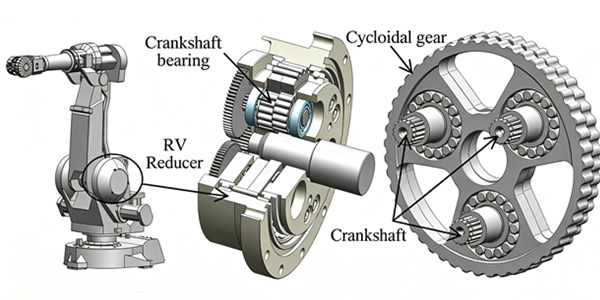
The cycloidal gear is a critical functional component of an RV reducer. Its complex cycloidal profile and the interaction between the cycloidal gear and pin gear housing make profile accuracy an important consideration during manufacturing.
Technical research on RV reducers has investigated both form grinding and generating grinding of cycloidal gears. Research on form grinding has also shown that profile modification and grinding accuracy are closely related to the resulting tooth geometry and meshing characteristics.
Consequently, grinding should be considered as part of the overall precision manufacturing system rather than simply a final material-removal operation.
Depending on the component, the grinding process may need to control:
Profile and tooth geometry
Dimensional accuracy
Roundness and cylindricity
Position and form tolerances
Surface roughness
Grinding-induced thermal damage
Consistency between production batches
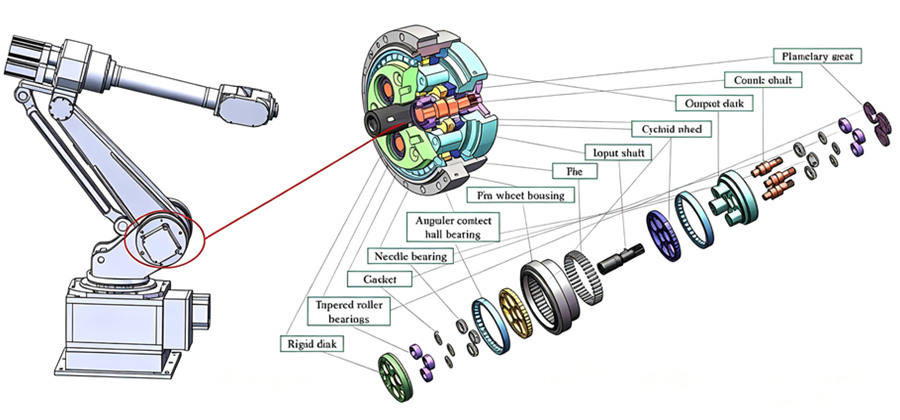
Different RV reducer components require different grinding approaches. Selecting the correct tool therefore begins with understanding the geometry and function of the individual component.
| RV Reducer Component | Main Grinding Requirement | Possible Grinding Solution |
|---|---|---|
| Cycloidal gear | Cycloidal tooth profile, dimensional and surface accuracy | CBN form/profile grinding wheel or other application-specific grinding wheel |
| Pin gear housing | Internal pin grooves and profile accuracy | Profile grinding wheel, including electroplated CBN solutions where appropriate |
| Eccentric shaft | Outer diameter, eccentric surfaces and bearing areas | CBN cylindrical or specialized grinding wheel |
| Bearing bores | Internal diameter, roundness and dimensional consistency | CBN internal grinding wheel |
| End faces | Flatness, parallelism and dimensional control | Face or surface grinding wheel |
The actual wheel specification should be determined from the workpiece material, hardness, geometry, machine and process conditions rather than from the component name alone.
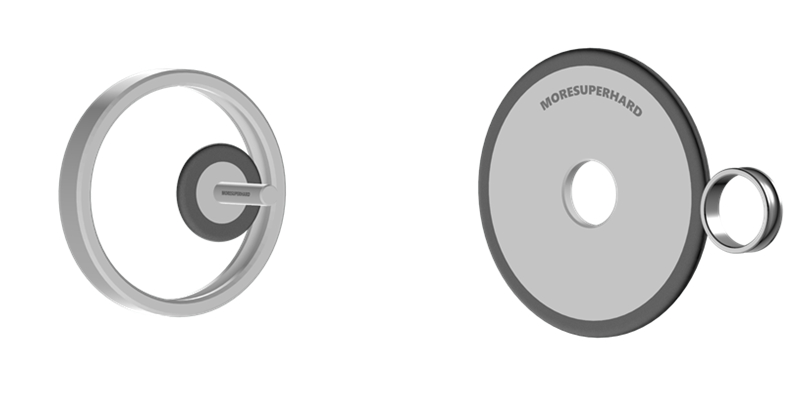
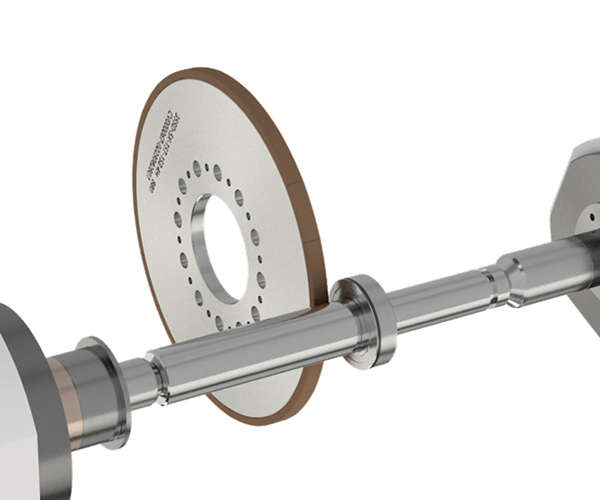
The cycloidal gear has a distinctive non-involute profile. Its grinding process therefore requires accurate reproduction of the designed cycloidal geometry.
Form grinding is one important approach for cycloidal gear manufacturing. In form grinding, the grinding wheel profile is designed to generate the required workpiece geometry. Research specifically focused on RV reducer cycloidal gears has studied form grinding and profile modification as methods for improving cycloidal tooth accuracy and meshing performance.
For this type of application, MORESUPERHARD can provide customized profile grinding wheels according to the customer's:
Cycloidal gear drawing
Workpiece material and hardness
Grinding machine
Grinding method
Required profile geometry
Grinding allowance
Surface finish requirement
Production volume
For hardened steel components, CBN is one of the superabrasive options that can be considered because of its suitability for grinding hardened ferrous materials. The final wheel specification, however, depends on the complete grinding application.
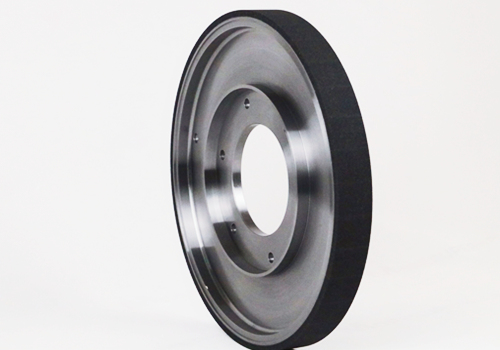
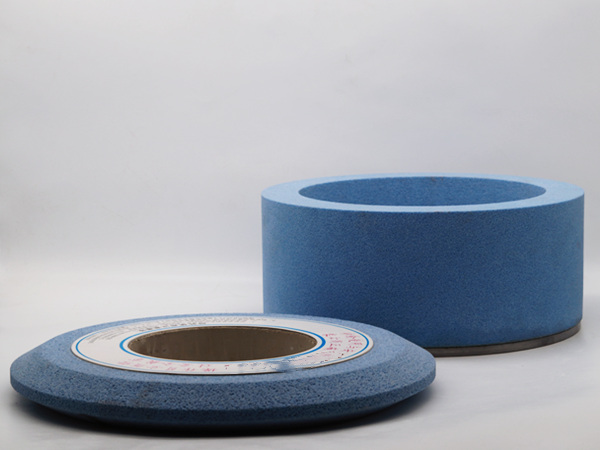
The pin gear housing contains the grooves that accommodate the pins interacting with the cycloidal gears. The groove geometry and dimensional consistency therefore need to be controlled during precision machining.
For profile and groove grinding, an application-specific CBN profile grinding wheel may be used where the workpiece material and process conditions are appropriate.
Electroplated CBN profile wheels are another option for applications where a fixed abrasive layer and defined profile are advantageous. Commercial grinding-tool suppliers also offer electroplated CBN profile wheels specifically for RV reducer pin housing groove grinding, demonstrating that this is an established application area for customized profile tools.
The correct wheel profile should be developed from the actual groove geometry and machine interface instead of being selected only according to wheel diameter or abrasive type.
Not every RV reducer component requires profile grinding. Eccentric shafts, bearing bores and end faces involve different geometrical features and may require cylindrical, internal or face grinding.
For hardened steel components, CBN grinding wheels can be considered for these precision grinding operations. The wheel bond, abrasive grain size, concentration, wheel structure and dimensions should be selected according to the specific grinding operation.
This is why a comprehensive RV reducer grinding solution should not focus on one wheel type alone. A production line may require several different superabrasive tools for different components or different stages of the machining process.
Form grinding and generating grinding are different grinding methods and should not be treated as interchangeable processes.
| Grinding Method | Basic Principle | Potential Application |
|---|---|---|
| Form grinding | A profiled grinding wheel reproduces the required workpiece geometry | Complex or specially defined cycloidal profiles |
| Generating grinding | Tool and workpiece move in a coordinated generating relationship | Suitable gear-related geometries and continuous production applications |
Research on RV reducer cycloidal gears has developed both form-grinding and generating-grinding models and examined how grinding parameters affect tooth-surface accuracy.
Therefore, the appropriate process should be selected according to the component geometry, machine capability, production requirements and target accuracy.
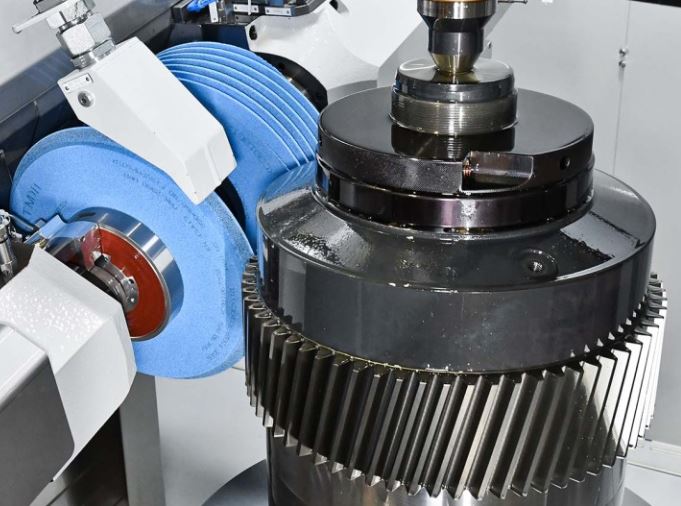
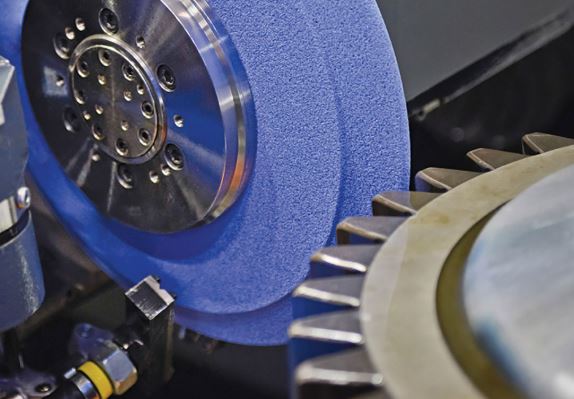
A grinding wheel and its dressing system should be considered as part of the same process.
For dressable grinding wheels, a diamond dressing roller, diamond form roll, or diamond profile roll can be used to generate or restore the required wheel geometry.
This becomes particularly important for profile grinding because the wheel geometry directly influences the geometry transferred to the workpiece.
Industry technical information on CBN gear grinding also highlights the relationship between CBN wheels and diamond dressing rolls. Multi-rib diamond rolls can be used to improve dressing efficiency, while the condition and precision of the rotary dressing system can affect the resulting grinding performance.
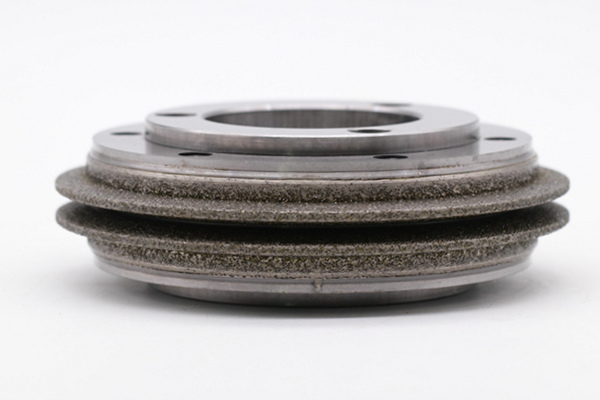
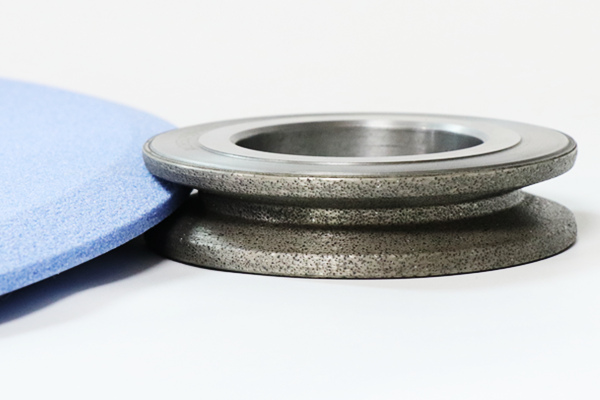
For a customized profile grinding application, the grinding wheel and diamond roller should not be treated as two unrelated products.
The required workpiece profile is determined.
The grinding wheel profile is designed according to the machining method.
The diamond dressing roller is designed to generate the required wheel profile where a dressable wheel is used.
The wheel, dressing system and machine are matched to the grinding process.
The grinding result is evaluated according to dimensional, profile and surface requirements.
Wheel and dressing parameters can then be optimized for production stability.
This integrated approach is particularly relevant for high-precision and high-volume manufacturing, where repeatability is as important as the initial grinding result.
MORESUPERHARD provides customized diamond and CBN superabrasive tools for different precision machining requirements in RV reducer manufacturing.
Our comprehensive solution can include:
CBN cycloidal gear grinding wheels
CBN profile grinding wheels
Electroplated CBN profile wheels
Resin-bonded CBN grinding wheels
Metal-bonded CBN grinding wheels
Vitrified CBN grinding wheels
CBN cylindrical grinding wheels
CBN internal grinding wheels
Face and surface grinding wheels
Diamond form rollers
Diamond profile rollers
Diamond rotary dressing rollers
Depending on the application, wheel dimensions, profile geometry, abrasive specification, bond system and mounting configuration can be customized according to the customer's machine and workpiece requirements.
Precision machining of RV reducer components involves multiple geometries and multiple grinding requirements. The optimal solution therefore depends on the relationship between the workpiece, grinding method, grinding wheel, dressing system and machine.
For cycloidal gears, the focus may be on accurate profile generation and stable form grinding. For pin gear housings, the priority may be internal groove geometry and profile consistency. For eccentric shafts and bearing features, cylindrical or internal grinding may be more appropriate.
By combining different CBN and diamond grinding tools with customized dressing solutions, manufacturers can develop a grinding system suited to their specific RV reducer production requirements.
If you are sourcing grinding wheels for RV reducer components, send us your component drawing, material and hardness, grinding machine model, existing wheel specification, and required accuracy.
MORESUPERHARD can evaluate the application and recommend a suitable combination of CBN grinding wheels, diamond profile tools and dressing rollers for your specific grinding process.
Contact MORESUPERHARD for a customized RV reducer component grinding solution.
Semiconductor Industry Solutions
PCD & PCBN Tools Grinding Industry
Diamond Cutting Bruting Polishing
Add: No.171 Zhongyuan Rd, Zhongyuan District, Zhengzhou, 450001, Henan, China
Tel: +86-371-86545906
Phone / Whats App: +86 18339903057
E-mail: [email protected]