
Nowadays, many cars are front-wheel drive. In this type of vehicle, the gearbox and drive axle are integrated into one unit, and two half-shafts connect the wheels to the gearbox to propel the car.
Since the relative position between the wheels and the gearbox changes frequently, the angles between the power output and input ends also vary constantly. Therefore, a universal joint drive assembly is required to accommodate these changes. This assembly is commonly known as a CV joint (constant velocity joint) or ball cage.
An automotive ball cage, also called a ball-type constant velocity joint, is one type of constant velocity joint. The other type is the cross-groove ball joint. It is a critical component in a car’s drive system, whose function is to transmit engine power from the transmission to the two front wheels and propel the vehicle at high speed.
Automotive ball cages are divided into inner ball cages and outer ball cages.
The inner ball cage connects to the differential of the gearbox, while the outer ball cage connects to the wheel hub. The outer ball cage is responsible not only for power delivery but also for enabling movement when the vehicle is turning. CBN form milling cutters enable high-efficiency machining of the outer raceways, cage windows, and inner raceways of bell-shaped housings.
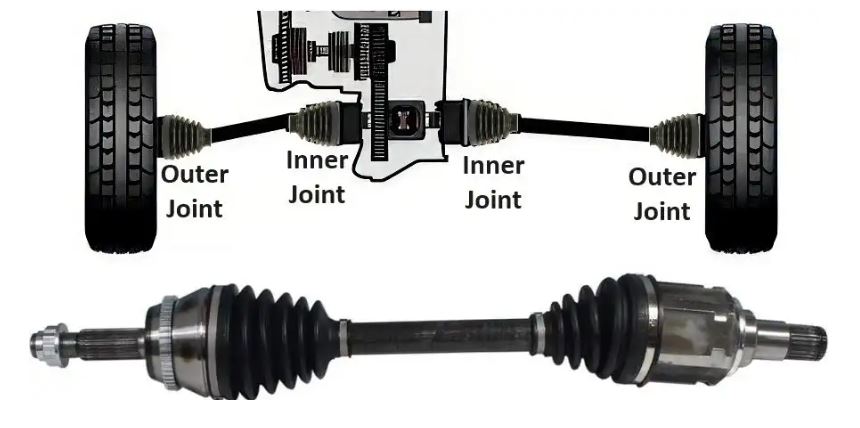
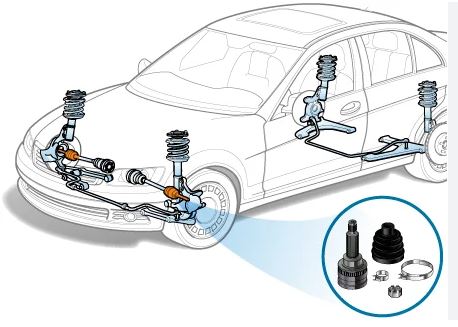
At both ends of the half-shaft in typical automotive Front-Wheel Drive (FWD) or All-Wheel Drive (AWD) systems, two distinct types of Constant Velocity (CV) joints—each serving a different function—are installed. Working in tandem, these joints must simultaneously transmit engine torque and accommodate the steering movements of the wheels as well as the vertical travel (bounce) of the suspension system.
1. Outer CV Joint (Hub End)
The outer CV joint connects directly to the wheel; its primary function is to accommodate the wheel's steering movements. Since it typically does not allow for axial sliding (telescopic movement), it is technically classified as a *fixed-type* CV joint (commonly of the Rzeppa type). It is engineered to withstand extremely large deflection angles (typically ranging from 45° to 50°).
The Four Core Components of the Outer CV Joint:
Bell Housing (Outer Race):
The outer shell features a bell-shaped profile, with its interior precision-machined to include 6 or 8 internal grooves featuring specific curved profiles.
Inner Race (Star):
Located inside the bell housing, this component features internal splines at its center and external grooves on its outer surface that correspond precisely with the grooves in the bell housing.
Cage:
A spherical ring containing multiple "windows" (openings), positioned between the bell housing and the inner race; its function is to precisely retain all the steel balls within a single constant-velocity plane.
Steel Balls:
Embedded within the grooves between the inner and outer races, these balls serve as the direct medium for transmitting torque.
2. Inner CV Joint (Transmission End)
The inner CV joint connects to the transmission or differential. In addition to providing a certain degree of angular deflection, its core function is to compensate for changes in the drive shaft's length caused by the vertical travel (up-and-down movement) of the suspension system. Consequently, it must allow for axial sliding (telescopic movement) and is classified as a *sliding-type* CV joint (such as the DOJ or VL types).
Core Components of the Inner CV Joint (Ball-Type):
Outer Housing (Cylinder):
The outer shell features a straight, cylindrical profile. Its interior is precision-machined with straight linear grooves (or grooves set at specific intersecting angles) to facilitate the axial sliding (back-and-forth movement) of the internal components. Eccentric Inner Race:
Its surface features corresponding raceways, while its outer diameter typically adopts a spherical or eccentric design to accommodate sliding and angular deflection.
Cage and Steel Balls: These components serve to retain the steel balls and transmit torque.
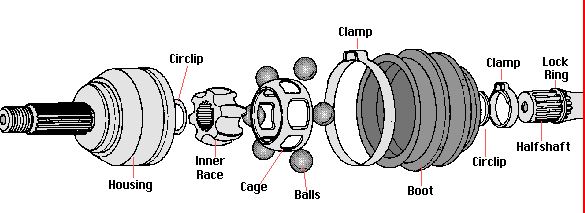
The main processing difficulty of CV joints lies in the hard machining of the inner race and bell housing (also known as outer race) after heat treatment.
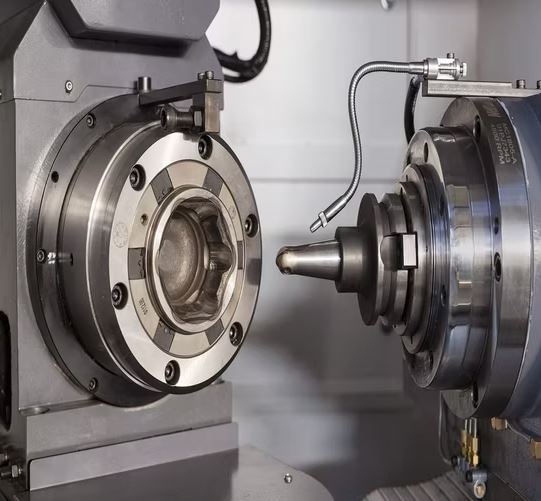
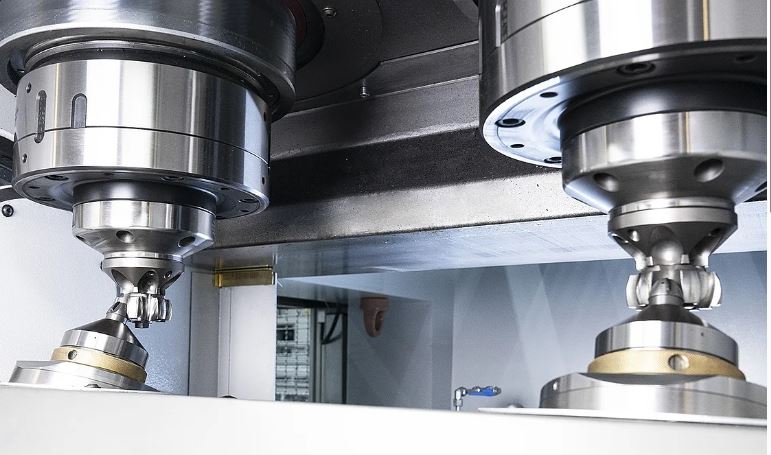
Bell housing milling CV cage milling
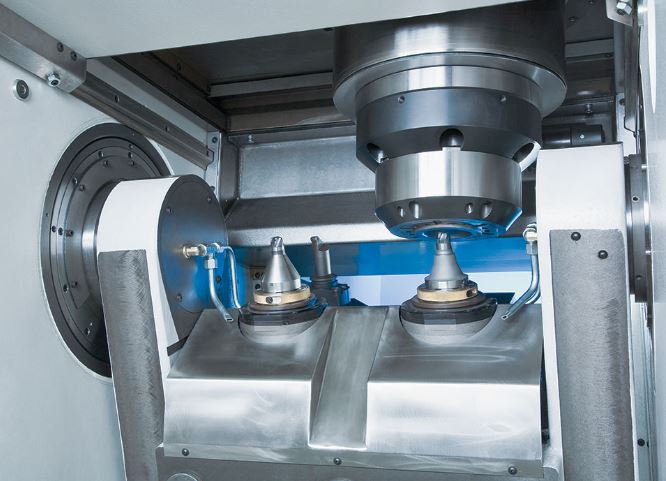
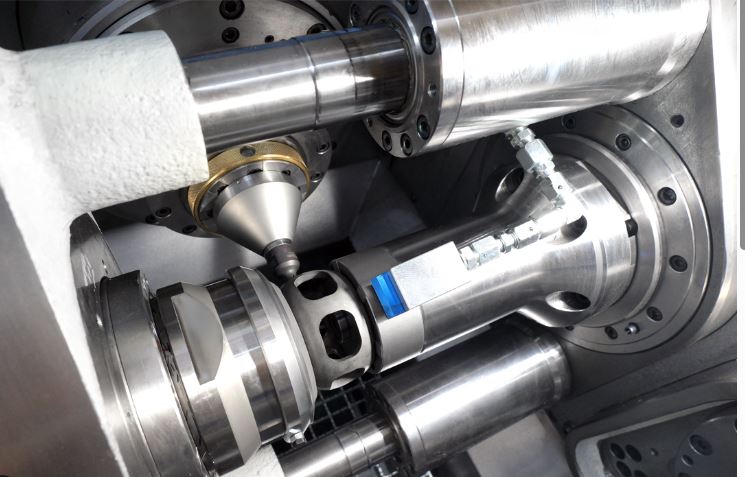
To overcome the barriers associated with the hard milling of ball cage raceways,Moresuperhard has moved beyond traditional tool design paradigms. Drawing upon the principles of superhard materials science, we have developed a high-performance CBN (Cubic Boron Nitride) ball cage milling cutter engineered specifically for the automotive transmission industry.
Our product advantages are manifested across the following key dimensions:
● Premium PCBN cutting edge material;
● High rigidity and long service life; the tool holder features a composite construction of steel and carbide, ensuring precise repeatability during re-installation;
● The tool head is designed with four cutting edges; custom configurations are also available upon request to meet specific customer requirements;
● Achieves high machining precision, with an edge profile tolerance of <0.005 mm and an edge runout of <0.004 mm;
● Standardized common specifications, backed by mature and reliable manufacturing processes.
● Patented Modular Interface: The connection between the cutting insert and the tool body utilizes a specialized positioning mechanism, ensuring simple and reliable operation.
● Replaceable PCBN Inserts: The cutting inserts are regrindable, thereby reducing tooling costs for the customer.
● Standardized Design: Common specifications are standardized, ensuring reliable manufacturing processes and timely delivery.
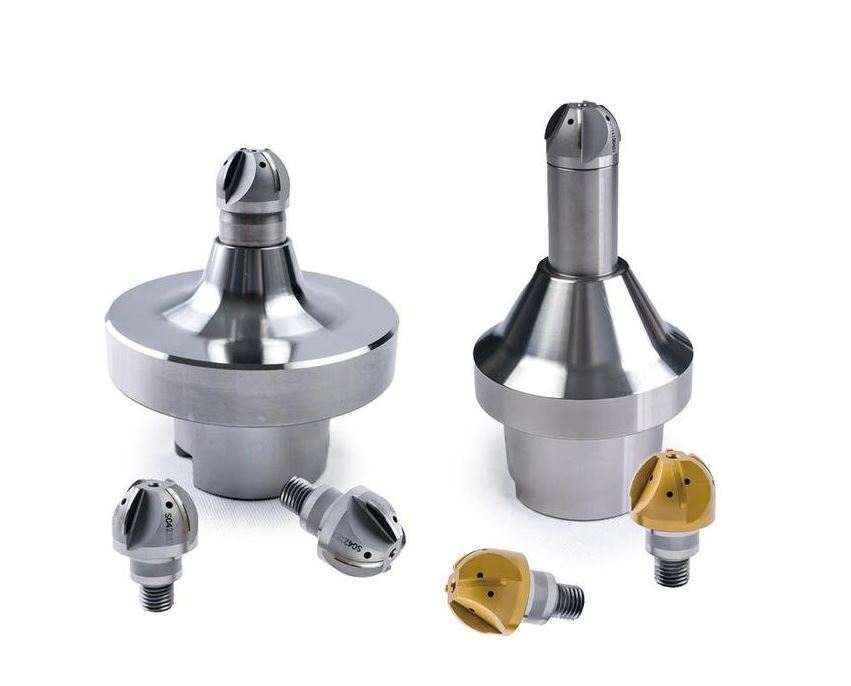
Different types of CV cages present vastly different machining spaces and chip evacuation conditions. Moresuperhard offers comprehensive, non-standard customization services:
For Outer CV Cage Bell Housings (Confined Internal Space): We provide CBN spherical and form milling cutters featuring specialized chip flute designs. These tools enhance shank rigidity and optimize chip clearance space, effectively preventing secondary chip compression from damaging the raceway surfaces.
For Inner and Outer CV Cage Star Sleeves (External Milling): We focus on optimizing the tool's helix angle and rake angle parameters to reduce cutting forces. This design guides the chips to carry away the majority of the generated heat
, enabling the effortless achievement of high surface finishes within the Ra 0.4 – 0.8 range.
Semiconductor Industry Solutions
PCD & PCBN Tools Grinding Industry
Diamond Cutting Bruting Polishing
Add: No.171 Zhongyuan Rd, Zhongyuan District, Zhengzhou, 450001, Henan, China
Tel: +86-371-86545906
Phone / Whats App: +86 18339903057
E-mail: [email protected]