
During optical component manufacturing, machining companies often face challenges such as processing high-hardness materials, preventing edge chipping and microcracks, achieving superior surface finish, and maintaining stable tool performance during continuous production. Due to their exceptional hardness, wear resistance, and cutting stability, diamond tools have become an essential solution for precision optical manufacturing.
MoreSuperHard provides customized diamond tool solutions for optical machining applications, including diamond grinding wheels, diamond core drills, and precision diamond cutting tools, helping manufacturers achieve reliable performance in optical glass, quartz, sapphire, and other advanced materials.
Modern optical manufacturing involves various difficult-to-machine materials, including optical glass, quartz glass, sapphire, crystal materials, engineering plastics, and composite materials.
These materials typically present three major machining challenges:
High hardness: Optical materials require tools with excellent hardness and wear resistance to maintain stable cutting performance.
Brittleness and risk of damage: Glass and crystal materials are sensitive to machining stress, which may result in edge chipping, cracks, and surface defects.
Strict precision requirements: Optical components require accurate dimensions, stable profiles, and excellent surface quality for their final applications.
Therefore, successful optical manufacturing requires not only advanced machining equipment but also properly designed ultra-hard tools matched with specific materials and processes.
Diamond is one of the hardest known materials and provides excellent wear resistance, thermal stability, and cutting ability. These characteristics make diamond tools suitable for machining challenging optical materials where conventional tools may struggle to maintain accuracy and tool life.
In optical manufacturing, diamond tools are mainly used for two processing approaches:
Diamond grinding wheel: Used for material removal, lens shaping, edge processing, and precision forming.
Ultra-precision diamond cutting: Used for achieving mirror-like surfaces, complex geometries, and extremely high dimensional accuracy.
Grinding is one of the most important stages in optical component production. Diamond grinding wheels are widely applied for shaping, edge processing, and precision machining of optical glass, quartz, sapphire, and other hard materials.
The lens generating process establishes the basic curvature and geometric profile of optical components, providing the foundation for subsequent finishing processes.
Diamond generating cup wheels are commonly used for:
Spherical lens machining
Aspherical lens processing
Precision glass curved surface grinding
High-hardness transparent material processing
Compared with conventional abrasives, diamond cup wheels provide stable cutting performance when machining hard and brittle materials.
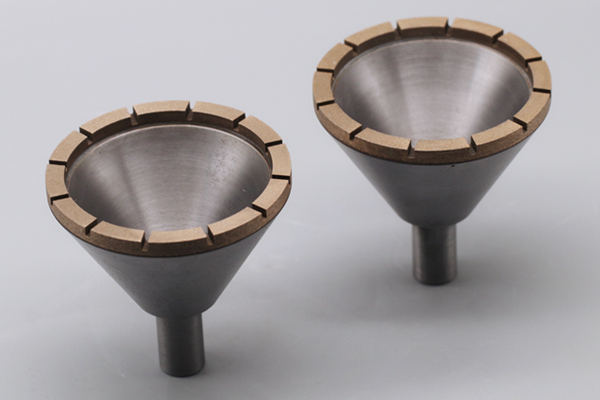
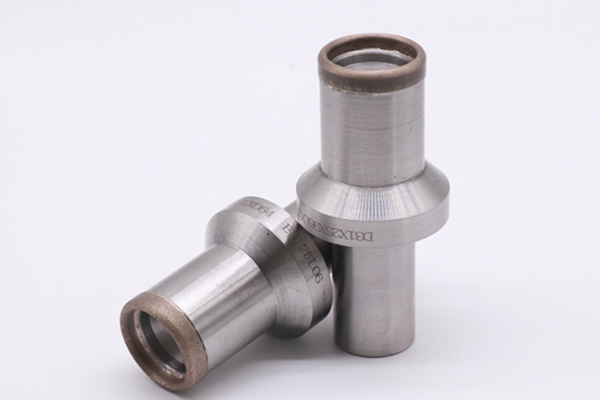
After lens shaping, optical components usually require centering, beveling, and edge finishing. These processes directly influence lens assembly accuracy, appearance quality, and final product reliability.
Diamond centering and beveling wheels help manufacturers improve:
Edge processing accuracy
Dimensional consistency
Surface quality
Resistance against edge chipping
Because different optical materials and equipment require different wheel specifications, customized diamond wheel designs are often necessary to achieve optimal machining performance.
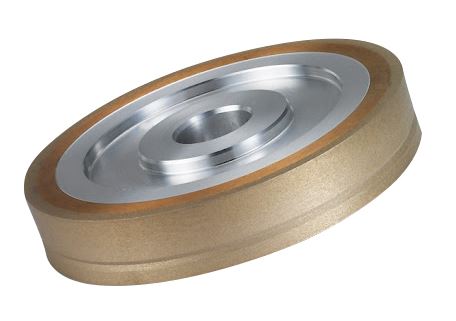
Some optical components require precision holes for mounting, positioning, or functional structures. Due to the brittleness of optical glass and crystal materials, conventional drilling methods may cause cracks, chipping, or unstable hole quality.
Diamond core drills provide an effective solution for precision hole machining by combining high hardness diamond abrasives with wear-resistant bonding technologies.
In addition to grinding processes, many advanced optical components require ultra-precision cutting technologies to achieve higher surface quality, tighter dimensional control, and more complex geometries.
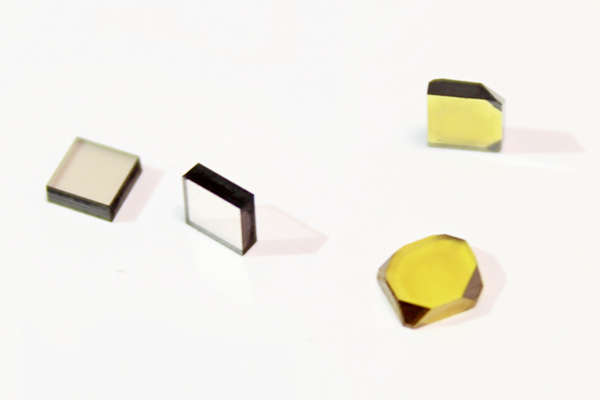
Diamond cutting tools are widely used in precision machining applications where manufacturers need excellent edge sharpness, stable cutting performance, and superior surface finish. Depending on the material and machining requirements, different types of diamond tools, including MCD, and CVD diamond tools, can be selected
Monocrystalline diamond (MCD) tools are widely recognized for their extremely sharp cutting edges, excellent hardness, and ultra-low edge radius. These characteristics make them suitable for applications requiring exceptional surface quality and precision.
For optical manufacturing applications, MCD tools help achieve:
Excellent surface finish
High dimensional accuracy
Stable contour machining
Reduced surface defects
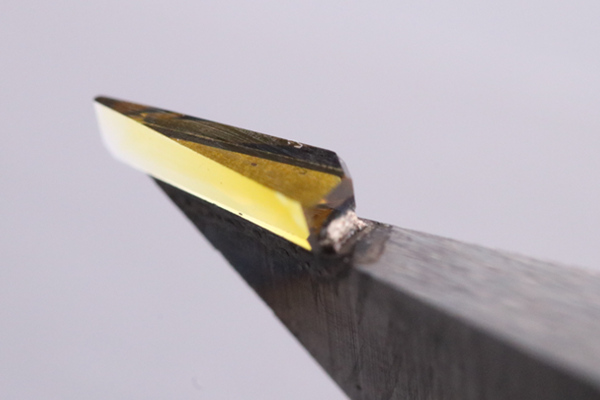
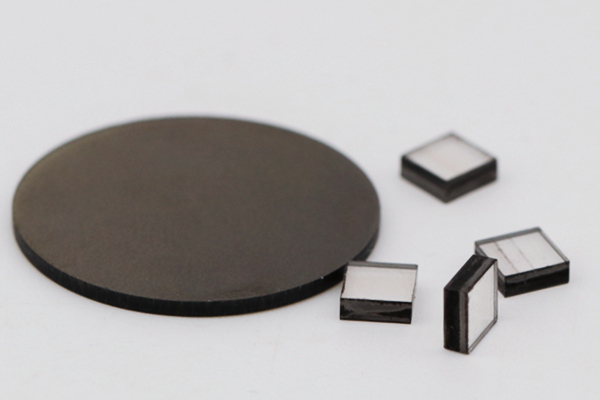
CVD diamond tools are manufactured using chemical vapor deposition technology and provide excellent hardness, wear resistance, and chemical stability.
They are suitable for machining applications involving:
Highly abrasive materials
Composite materials
Aluminum alloy structural components
Precision engineering parts
CVD diamond tools provide a durable machining solution where conventional cutting tools may experience rapid wear or unstable performance.
Modern optical manufacturing usually requires multiple machining processes rather than a single operation. Selecting the right diamond tool for each stage helps manufacturers achieve better productivity, accuracy, and surface quality.
| Manufacturing Stage | Recommended Diamond Tools | Main Purpose |
|---|---|---|
| Rough Processing | Diamond generating cup wheels, diamond core drills | Material removal, basic shape forming, efficient machining |
| Precision Finishing | Diamond centering wheels, beveling wheels, precision diamond tools | Dimensional control, edge quality improvement, surface optimization |
| Ultra-Precision Machining | MCD diamond tools, CVD diamond tools | Mirror finishing, ultra-high precision contour machining |
MoreSuperHard specializes in the development and manufacturing of superhard material processing tools, providing diamond and CBN tool solutions for precision manufacturing industries.
For optical manufacturing applications, MoreSuperHard offers:
Customized diamond grinding wheels for optical glass and hard materials
Diamond core drills for precision hole machining
MCD, and CVD diamond cutting tools
Application-oriented tool design based on customer machining requirements
With professional experience in superhard tool manufacturing and customized solution development, MoreSuperHard helps global customers achieve higher precision, stable production performance, and improved machining consistency.
---EDITOR:Doris Hu, Erin Zhang
---POST: Doris Hu
Semiconductor Industry Solutions
PCD & PCBN Tools Grinding Industry
Diamond Cutting Bruting Polishing
Add: No.171 Zhongyuan Rd, Zhongyuan District, Zhengzhou, 450001, Henan, China
Tel: +86-371-86545906
Phone / Whats App: +86 18339903057
E-mail: [email protected]