
Finishing hardened steel above 60 HRC is challenging because of the material's high hardness, tool wear, and the difficulty of maintaining dimensional accuracy and surface quality. These problems are especially important in mold manufacturing, where cavity details, side walls, and complex contours must meet strict machining requirements.
CBN end mills are an option for precision milling of suitable hardened steels. With the right tool geometry and cutting conditions, they can help manufacturers improve finishing consistency and reduce problems associated with excessive tool wear.
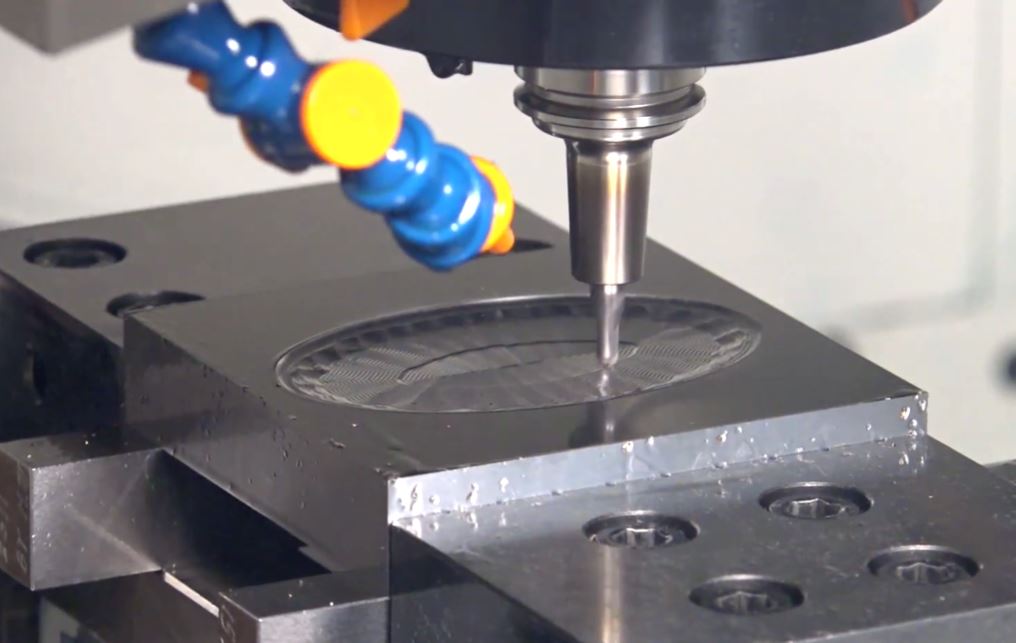
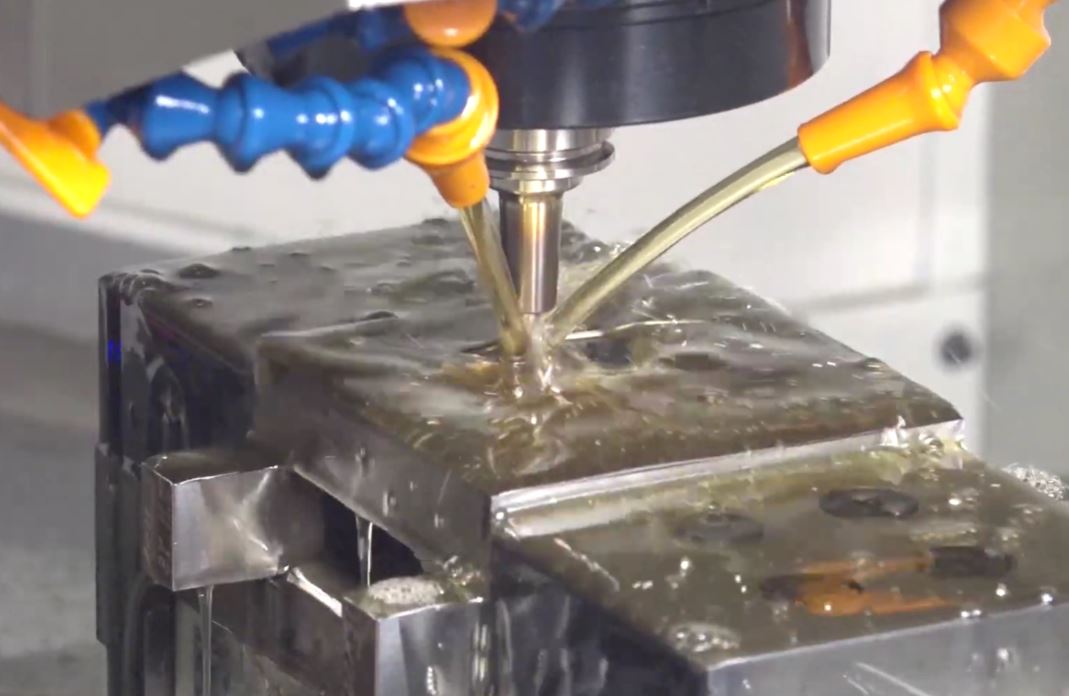
Cubic boron nitride (CBN) is a superhard cutting material used in applications involving high-hardness ferrous materials. CBN end mills are designed for specific finishing operations where conventional carbide tools may experience rapid wear or struggle to maintain consistent results.
When selecting a CBN milling cutter for hardened steel, manufacturers should consider:
Tool wear: Excessive wear can affect dimensional accuracy and increase tool replacement frequency.
Surface finish: Tool condition and cutting stability influence the finished surface and the amount of subsequent polishing required.
Dimensional consistency: Stable cutting conditions are important when machining mold cavities, profiles, and precision components.
Machining efficiency: An appropriate tool can help reduce interruptions caused by tool changes and repeated finishing operations.
Actual performance depends on the workpiece material, hardness, tool geometry, machine rigidity, and cutting parameters. CBN tools are not automatically the best choice for every steel milling application.
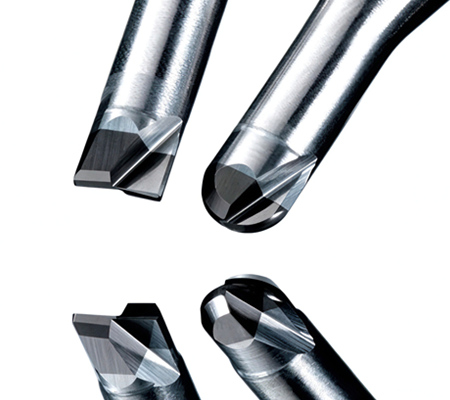
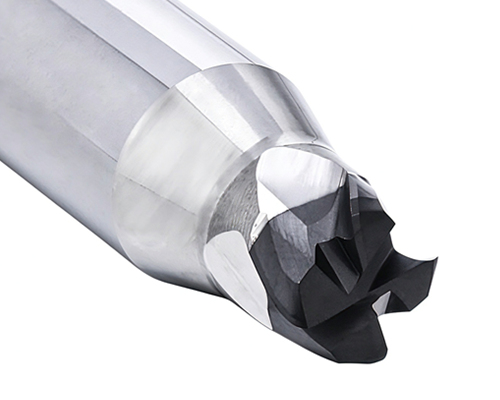
CBN end mills can be considered for precision finishing of hardened mold steels and other suitable high-hardness steel components.
Typical applications include:
Mold cavity finishing: Machining hardened cavities and detailed features after heat treatment.
Side-wall finishing: Improving the dimensional consistency and surface quality of hardened vertical surfaces.
Profile milling: Finishing contours and shaped surfaces on precision components.
Flat-surface finishing: Milling suitable hardened-steel surfaces where dimensional accuracy and surface finish are important.
Small-feature machining: Accessing narrow areas and detailed geometries when the cutter diameter and reach are appropriate.
The final tool selection should match the geometry of the workpiece and the accessibility of the machining area.
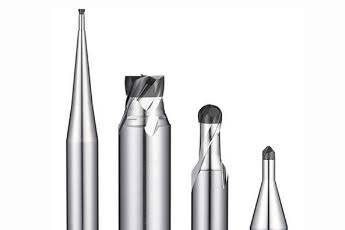
Tool geometry affects accessibility, surface finish, and cutting stability. The most suitable design depends on the feature being machined.
| CBN end mill type | Typical application |
|---|---|
| Square end mill | Flat surfaces, shoulders, and side-wall finishing |
| Ball nose end mill | Curved surfaces, 3D mold cavities, and complex contours |
| Corner-radius end mill | Features requiring a controlled corner radius |
| Small-diameter end mill | Fine details and narrow machining areas |
| Long-neck end mill | Deep cavities or recessed features requiring extended reach |
These are general selection guidelines. Available geometries and suitable workpiece hardness ranges depend on the specific tool design.
When machining deep cavities or narrow features, avoid selecting a tool based on reach alone. Excessive tool overhang can reduce rigidity and contribute to vibration, tool damage, and inconsistent surface quality.
Even a suitable CBN end mill can perform poorly if machining conditions are inappropriate. Before changing the tool grade, review the complete machining setup.
1. Confirm the workpiece hardness and material
Different hardened steels can respond differently to the same cutting tool. Provide the steel grade and actual hardness when selecting a CBN end mill.
2. Check machine rigidity and tool overhang
Secure workholding, a rigid tool holder, and the shortest practical overhang help reduce vibration and unstable cutting.
3. Select suitable cutting parameters
Spindle speed, feed rate, axial and radial depth of cut, and toolpath should be matched to the tool manufacturer's recommendations and the machining application. Avoid applying a single set of parameters to every hardened-steel job.
4. Monitor tool wear and surface quality
Inspect the cutting edge and machined surface regularly. Unexpected wear, chipping, or surface deterioration may indicate unsuitable cutting conditions, excessive tool deflection, or an incorrect tool selection.
5. Match the tool to the finishing allowance
CBN end mills should be selected according to the remaining stock, required tolerance, surface finish, and machining strategy. The finishing allowance must be appropriate for the tool and operation.
To recommend a suitable CBN milling cutter for hardened steel finishing, prepare the following information:
Workpiece material and hardness, such as hardened mold steel above 60 HRC
Machining operation, such as cavity, side-wall, flat-surface, or contour finishing
Required surface finish and dimensional tolerance
Workpiece geometry, including cavity depth and narrow features
Machine type, spindle capability, and tool-holder information
Current tool diameter, cutting parameters, and machining problems, if available
This information helps narrow down the appropriate tool geometry and machining approach.
For manufacturers machining hardened mold steel and other suitable high-hardness components, choosing the right CBN end mill requires more than selecting a superhard cutting material. Workpiece hardness, feature geometry, machine rigidity, and finishing requirements all influence tool performance.
Moresuperhard provides superhard cutting-tool solutions for precision machining applications. Contact our team with your workpiece material, hardness, machining details, and required finish to discuss a suitable CBN end mill for your application.
Semiconductor Industry Solutions
PCD & PCBN Tools Grinding Industry
Diamond Cutting Bruting Polishing
Add: No.171 Zhongyuan Rd, Zhongyuan District, Zhengzhou, 450001, Henan, China
Tel: +86-371-86545906
Phone / Whats App: +86 18339903057
E-mail: [email protected]