
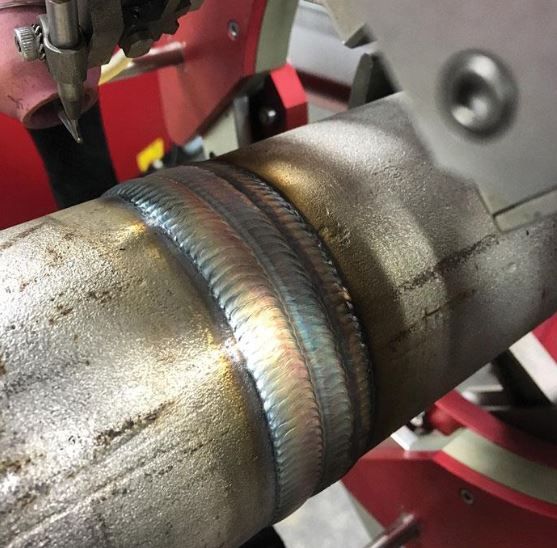
During welded tube and pipe production, excess material can remain along the weld seam after the welding process. This excess material may be referred to as weld bead, weld flash, or weld burr.
Depending on the production requirements, the excess weld material may need to be removed from the inside or outside of the tube. This operation is commonly known as weld seam scarfing or weld seam deburring.
For continuous welded tube production, manufacturers may use different carbide tooling configurations for internal and external weld seam removal, including carbide scarfing rings, ID scarfing tools, OD scarfing inserts, roughing inserts, and customized carbide insert blanks.
The correct tool geometry and carbide grade depend on tube dimensions, tube material, weld seam condition, production parameters, and the existing tube mill.
Weld seam deburring is the process of removing excess material, weld flash, weld bead, or burr from the weld seam of a welded tube or pipe.
After the tube is formed and welded, excess weld material can remain along the seam. Depending on the production requirements, it may need to be removed from:
-- The internal weld seam
-- The external weld seam
-- Both internal and external weld seams
In continuous tube production, the scarfing or deburring operation can be integrated into the production line.
The objective is not simply to remove excess weld material. Properly designed tooling should also support:
-- Consistent weld seam removal
-- Stable cutting performance
-- Controlled cutting forces
-- Consistent tube surface quality
-- Reliable tool life
The location of the weld seam determines the basic scarfing tool configuration.
| Application | Internal Weld Seam Deburring | External Weld Seam Deburring |
|---|---|---|
| Processing position | Inside the tube | Outside the tube |
| Main purpose | Remove internal weld bead or flash | Remove external weld bead or flash |
| Typical cutting component | Carbide scarfing ring / ID scarfing tool | Carbide scarfing insert / OD scarfing tool |
| Tool support | Internal support system | External tool holder or scarfing head |
| Main challenge | Limited internal working space | Cutting stability and insert geometry |
| Important parameters | Tube ID, wall thickness, weld profile | Tube OD, wall thickness, weld profile |
Although both processes are used for weld seam removal, ID and OD scarfing require different tool structures and geometries.
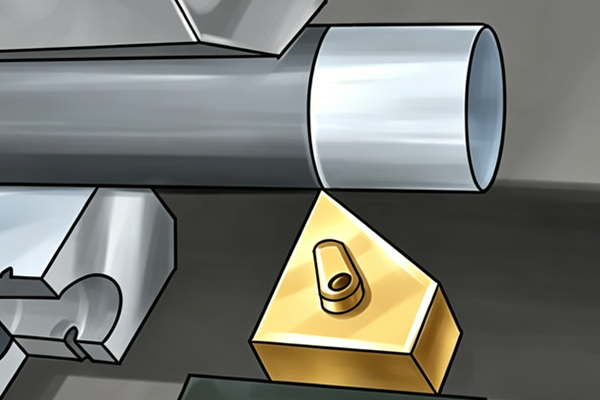
Internal scarfing removes excess weld material from the inside surface of a welded tube or pipe.
Because the cutting tool operates inside the tube, the available working space is limited. The tool therefore needs to be accurately matched to the tube ID and internal weld seam.
A typical internal scarfing system may include:
-- Internal scarfing tool
-- Carbide scarfing ring
-- Ring holder
-- Support components
-- Positioning components
-- Other components according to the tube mill configuration
As the welded tube moves continuously through the production line, the carbide cutting edge engages the internal weld seam and removes excess material.
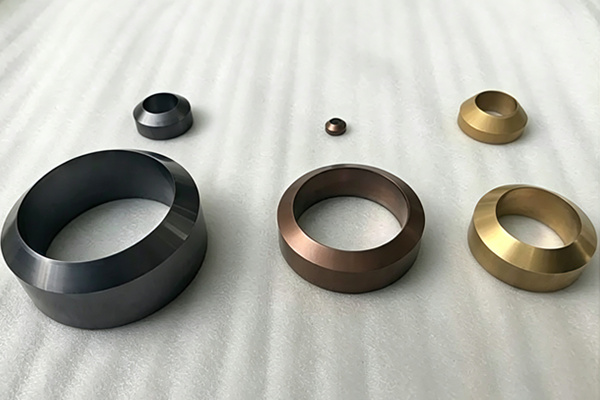
A carbide scarfing ring is a cutting component designed for internal weld bead and weld flash removal.
The ring must be accurately manufactured according to the application because it operates within the limited internal space of the tube.
Important design considerations include:
-- Tube inside diameter
-- Ring dimensions
-- Wall thickness
-- Weld seam profile
-- Cutting profile
-- Clearance
-- Carbide grade
-- Edge preparation
-- Production conditions
The carbide ring should provide sufficient edge strength while maintaining effective cutting performance.
External scarfing removes excess weld material from the outside surface of welded tube and pipe.
A typical OD scarfing system may consist of:
-- Carbide scarfing insert
-- Scarfing tool holder
-- Scarfing head
-- Positioning components
The insert is positioned against the external weld seam. As the tube moves through the production line, the cutting edge continuously removes the excess weld material.
Compared with internal scarfing, external scarfing generally provides more accessible tooling space, but the cutting edge must still maintain stable contact with the weld seam.
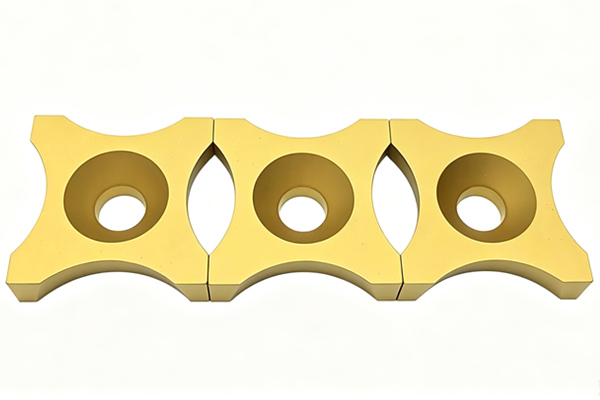
A carbide scarfing insert is a replaceable cutting component used for external weld bead, weld flash, and burr removal.
Depending on the application, the insert geometry may be customized to match the weld seam profile and scarfing system.
Important parameters include:
-- Tube outside diameter
-- Wall thickness
-- Weld bead height
-- Weld bead width
-- Weld bead shape
-- Cutting profile
-- Clearance geometry
-- Edge preparation
-- Tool holder configuration
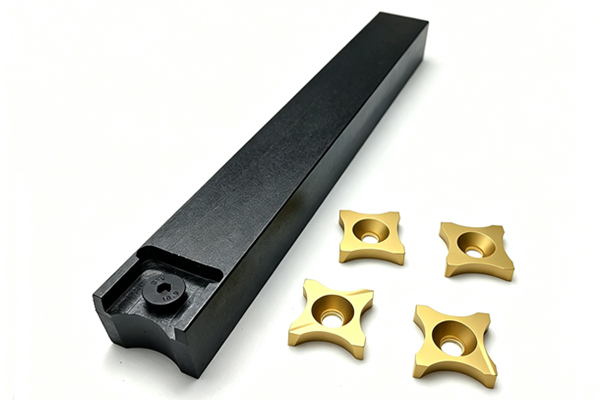
Choosing the correct tool starts with identifying whether the application requires internal or external weld seam removal.
| Requirement | Recommended Tool | Key Information Required |
|---|---|---|
| Internal weld seam removal | Carbide scarfing ring / ID tool | Tube ID, wall thickness, weld profile |
| External weld seam removal | Carbide scarfing insert / OD tool | Tube OD, wall thickness, weld profile |
| Heavy external weld bead | Roughing scarfing insert | Weld bead size, cutting load, production conditions |
| Complex tool profile | Customized carbide insert | Drawing, sample, final tool geometry |
| Special internal application | Customized carbide ring | Tube ID, weld profile, existing tooling |
The tool should be selected based on the complete production condition rather than tube diameter alone.
Some welded tube applications produce a relatively large or uneven weld bead that requires more aggressive material removal.
In these situations, a roughing scarfing insert may be used before a final scarfing or finishing operation.
A typical process may be:
Roughing → Final Scarfing / Finishing
Roughing operations generally require greater emphasis on:
-- Cutting edge strength
-- Carbide toughness
-- Resistance to mechanical loading
-- Stability under heavier cutting conditions
Finishing operations may place greater emphasis on:
-- Controlled weld material removal
-- Weld seam consistency
-- Surface quality
-- Cutting edge stability
The appropriate configuration depends on the weld seam condition and production requirements.
For suitable applications, scarfing inserts can be designed with multiple usable cutting edges.
When one cutting edge reaches its wear limit, the insert can be indexed to another cutting edge, depending on the insert and holder design.
Potential benefits include:
-- Simplified insert replacement
-- Reduced tooling change time
-- Better utilization of the carbide insert
-- Reduced production interruptions
The number of usable cutting edges depends on the insert geometry and scarfing system.
Carbide grade selection is an important factor in weld seam deburring tool performance.
The carbide needs to provide a suitable balance between:
-- Wear resistance
-- Toughness
-- Edge strength
-- Impact resistance
-- Thermal stability
A carbide grade with higher wear resistance may be beneficial in abrasive conditions, while a tougher grade can provide better resistance to edge chipping under mechanical impact.
The final grade should be selected according to the actual tube material, weld seam condition, cutting load, production speed, and tool geometry.
MY46 is developed for weld seam removal applications requiring a combination of toughness and resistance to deformation under elevated-temperature conditions.
Key characteristics include:
-- Good toughness
-- Good impact resistance
-- Good resistance to deformation under elevated-temperature conditions
-- Suitable for selected small and medium-diameter welded tube applications
For selected applications, MY46 can be combined with an appropriate CVD coating to improve wear resistance and cutting stability.
MY75 is designed for applications requiring higher toughness under demanding operating conditions.
Key characteristics include:
-- High toughness
-- Good reliability
-- Good resistance to high-temperature wear
-- Suitable for selected medium and large-diameter welded tube applications
MY75 can also be combined with suitable coating technology according to application requirements.
| Carbide Grade | Main Characteristics | Application Consideration |
|---|---|---|
| MY46 | Balance of toughness, impact resistance and thermal performance | Selected small and medium-diameter welded tubes |
| MY75 | Higher toughness and good resistance to demanding operating conditions | Selected medium and large-diameter welded tubes |
The final carbide grade should be confirmed according to actual production conditions rather than selected only according to tube size.
The cutting edge of a weld seam scarfing tool needs to balance sharpness and edge strength.
A very sharp edge can reduce cutting resistance but may be more vulnerable to chipping when exposed to mechanical impact or unstable cutting conditions.
A stronger edge can improve resistance to chipping, but excessive edge preparation may affect cutting performance.
For this reason, edge preparation should be matched to:
-- Tube material
-- Weld bead condition
-- Cutting load
-- Tool geometry
-- Production speed
-- Carbide grade
Moresuperhard can optimize the cutting edge according to the specific scarfing application.
Possible causes include:
-- Incorrect tool geometry
-- Incorrect tool positioning
-- Excessive tool wear
-- Variation in weld bead size
-- Insufficient cutting depth
The weld seam profile and cutting edge condition should be checked before changing the carbide grade.
Possible causes include:
-- Insufficient carbide toughness
-- Excessive cutting load
-- Mechanical vibration
-- Unstable tool positioning
-- Unsuitable edge preparation
-- Weld bead variation
Potential solutions include selecting a tougher carbide grade, optimizing edge preparation, and improving tool positioning.
Possible causes include:
Carbide grade not matched to the application
High thermal loading
Abrasive conditions
Excessive cutting speed or load
Unsuitable cutting geometry
Depending on the application, a different carbide grade, coating, or cutting geometry may improve tool life.
Possible causes include:
Chipped cutting edge
Excessive insert wear
Incorrect tool position
Unsuitable insert geometry
Damaged cutting edge
Inspection of the insert and scarfing setup can help identify the source of the surface defect.
Possible causes include:
Weld bead variation
Tool wear
Incorrect positioning
Insufficient tool rigidity
Incorrect cutting profile
The welding process and scarfing system should be evaluated together because variations in the weld seam can directly affect cutting performance.
Standard tooling can be suitable for many welded tube applications, but production conditions can vary significantly.
Differences in:
Tube diameter
Wall thickness
Tube material
Weld bead size
Weld bead profile
Production speed
Cutting load
Existing tube mill
Tool holder configuration
can affect scarfing tool performance.
Moresuperhard provides customized carbide solutions for internal and external weld seam deburring.
Available solutions include:
Carbide Scarfing Rings
ID Scarfing Tools
OD Scarfing Inserts
Roughing Scarfing Inserts
Customized Carbide Inserts
Customized Carbide Insert Blanks
Application-Specific Carbide Grades
Customized Cutting Geometries
Edge Preparation Solutions
Coating Options
For specialized scarfing insert designs, Moresuperhard can also provide customized carbide insert blanks.
Instead of starting from a completely standard carbide blank, a preformed blank can be produced closer to the required final geometry.
Depending on the design, this can reduce subsequent contour grinding and finishing requirements.
Customized carbide blanks can be developed according to:
Customer drawings
Existing insert samples
Final insert geometry
Required carbide grade
Machining requirements
Tool holder configuration
This solution can be useful when the required scarfing insert has a complex or application-specific profile.
Moresuperhard supplies customized carbide scarfing tools for internal and external weld seam deburring in welded tube and pipe production.
Our solutions include:
Carbide Scarfing Rings
ID Scarfing Tools
OD Scarfing Inserts
Roughing Inserts
Customized Carbide Inserts
Carbide Insert Blanks
Application-Specific Carbide Grades
Customized Cutting Geometries
To evaluate your application, please send us:
Tube drawing or dimensions
Tube material
Wall thickness
Weld bead dimensions
Internal or external weld seam requirement
Existing tooling drawing or sample
Production conditions
Contact Moresuperhard for a customized carbide solution for internal and external weld seam deburring.
Semiconductor Industry Solutions
PCD & PCBN Tools Grinding Industry
Diamond Cutting Bruting Polishing
Add: No.171 Zhongyuan Rd, Zhongyuan District, Zhengzhou, 450001, Henan, China
Tel: +86-371-86545906
Phone / Whats App: +86 18339903057
E-mail: [email protected]